
Less Unreasonable: Responding to Sonic Performance Through Print
6 April 2026 · By Pavement Print Studio
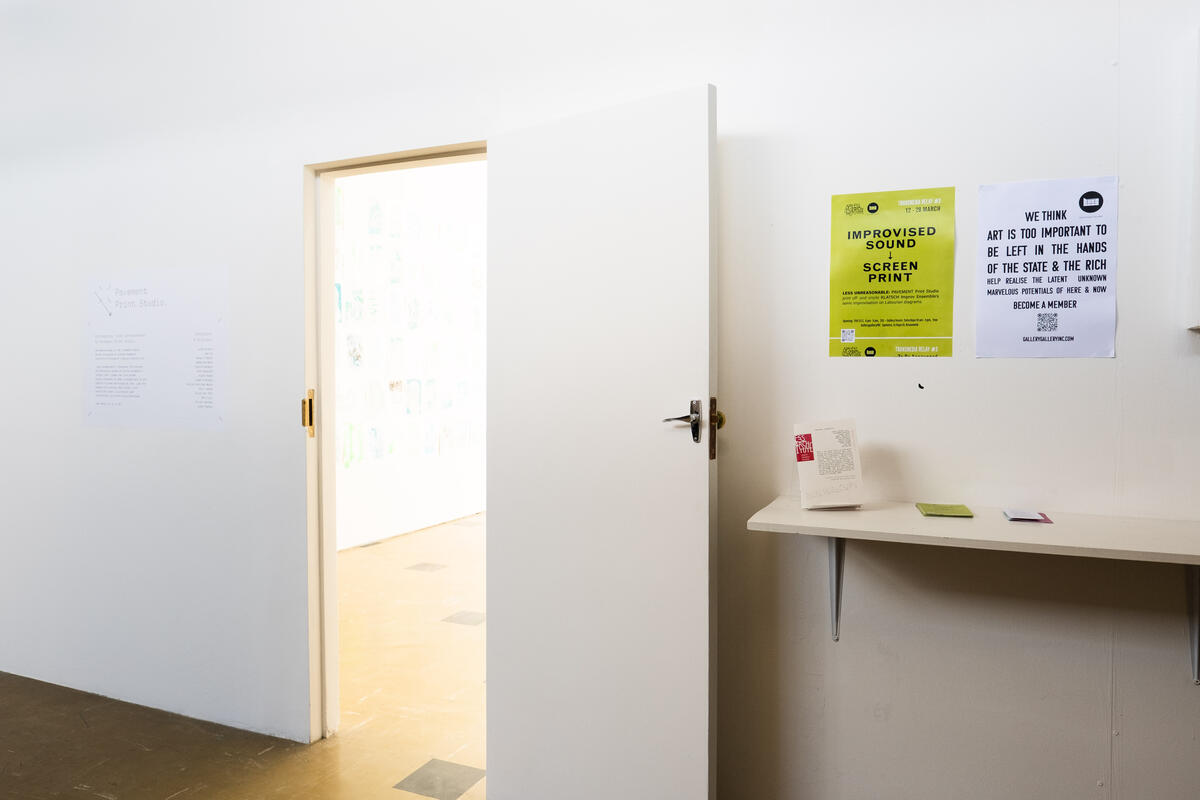
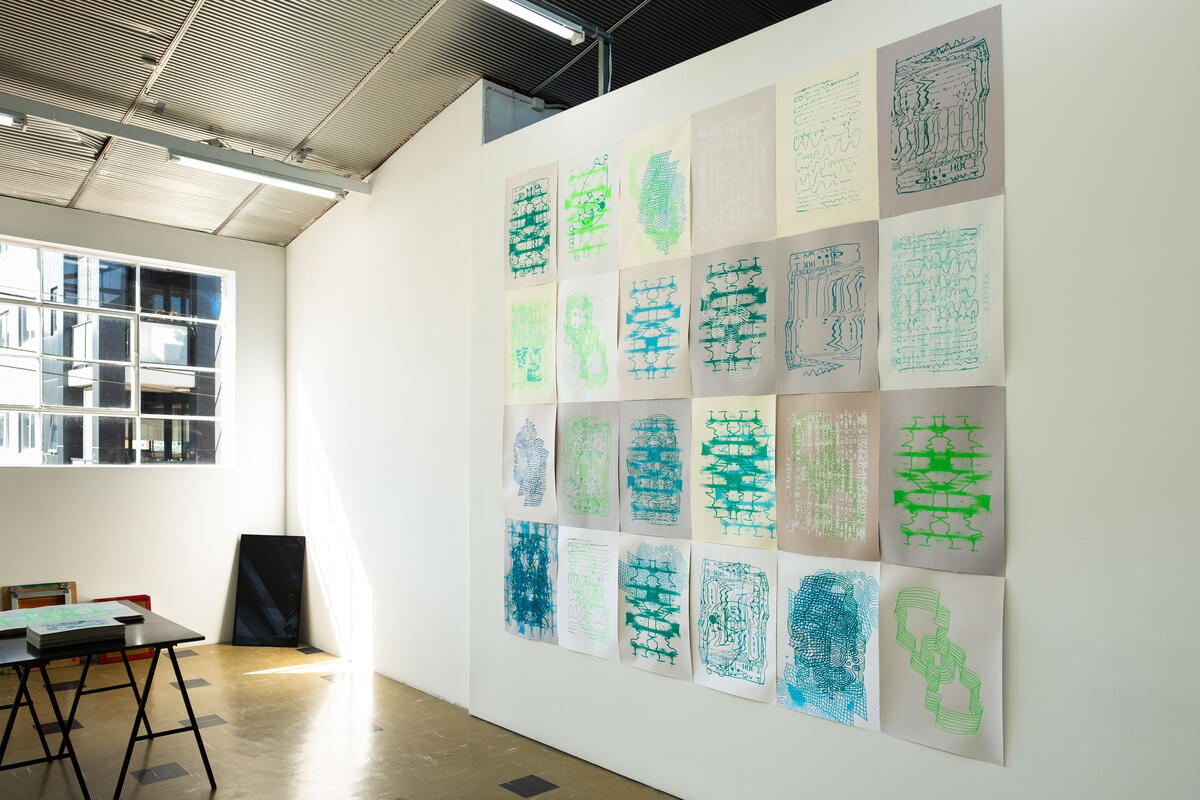
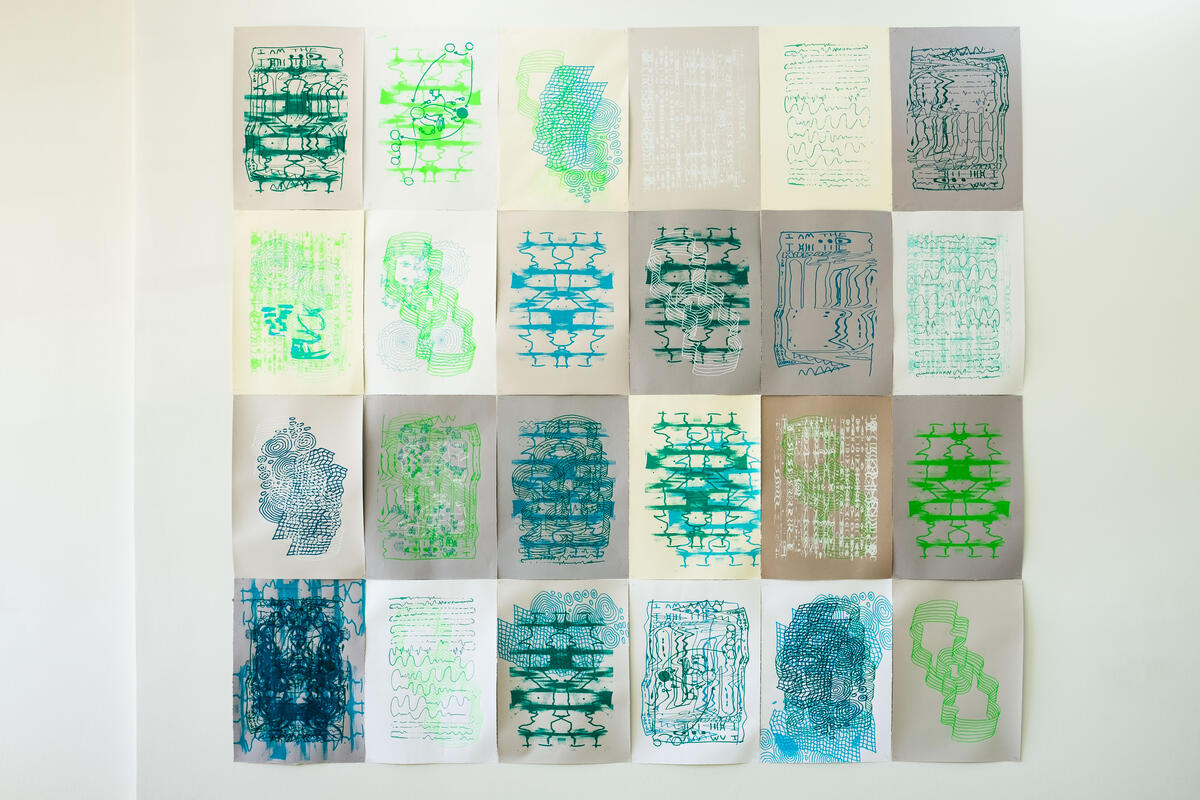
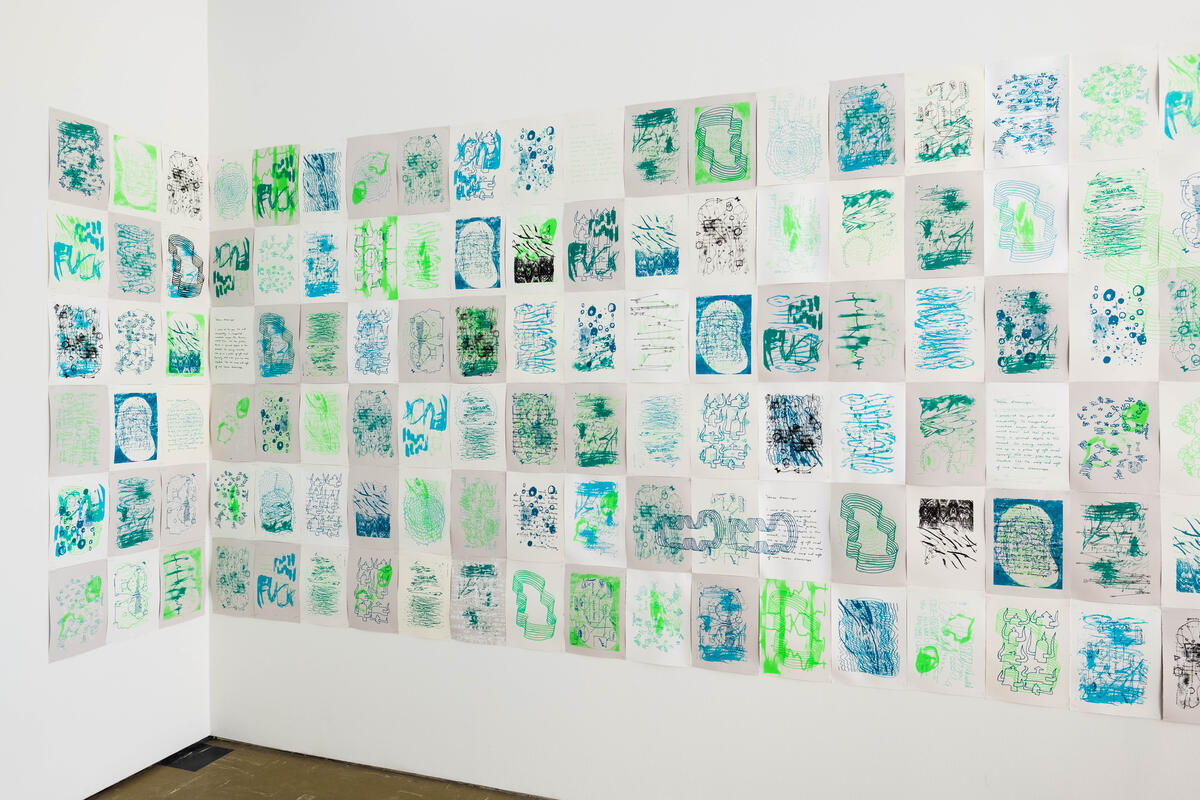
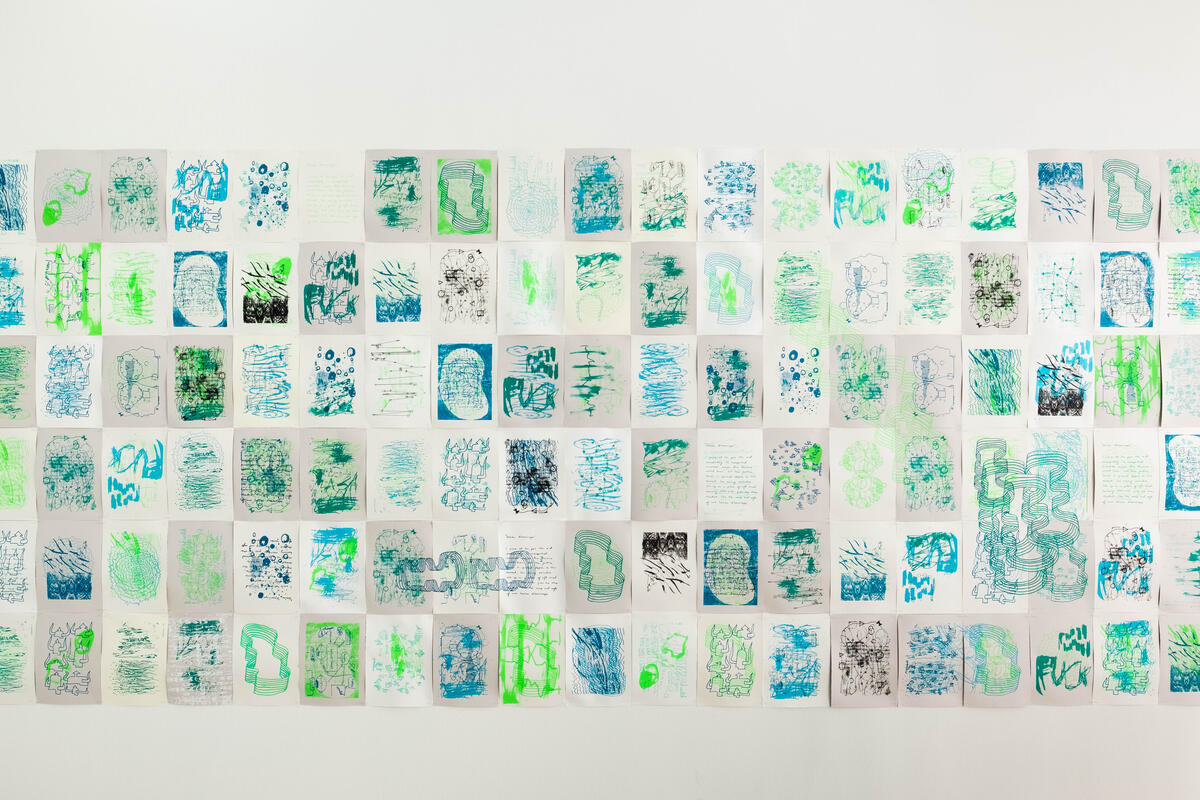
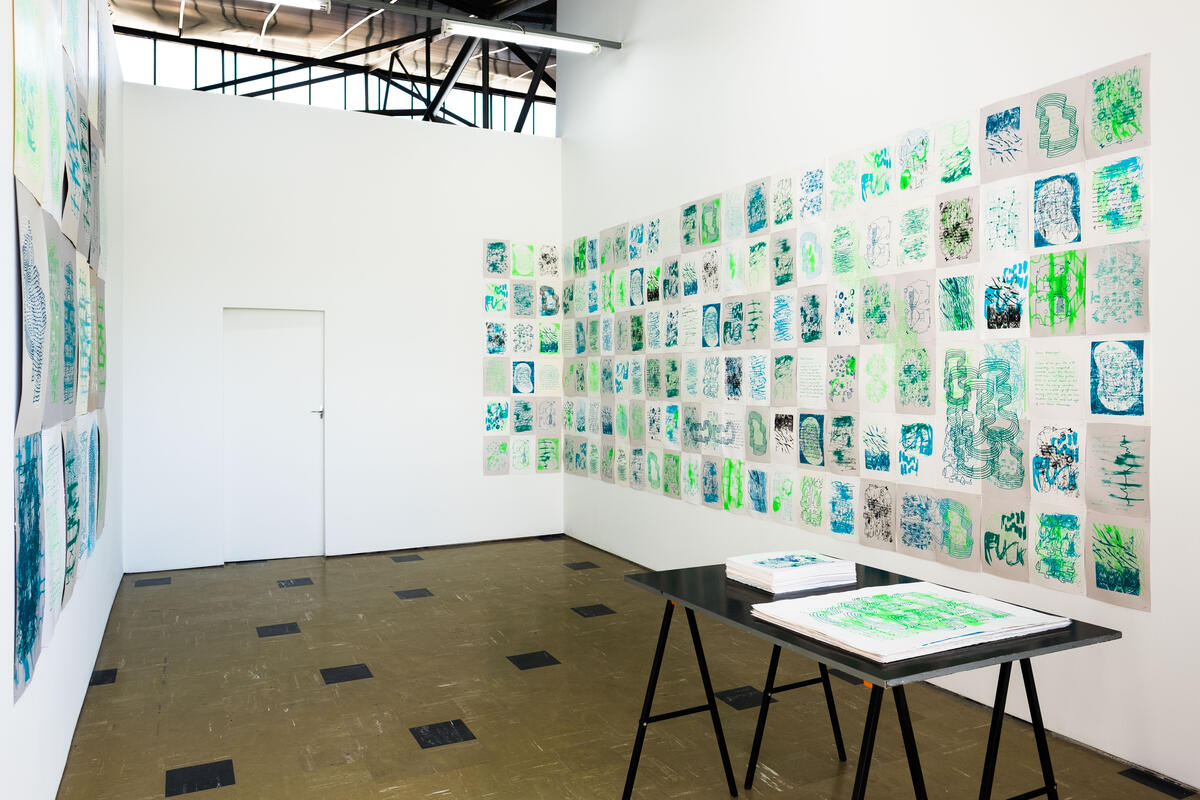
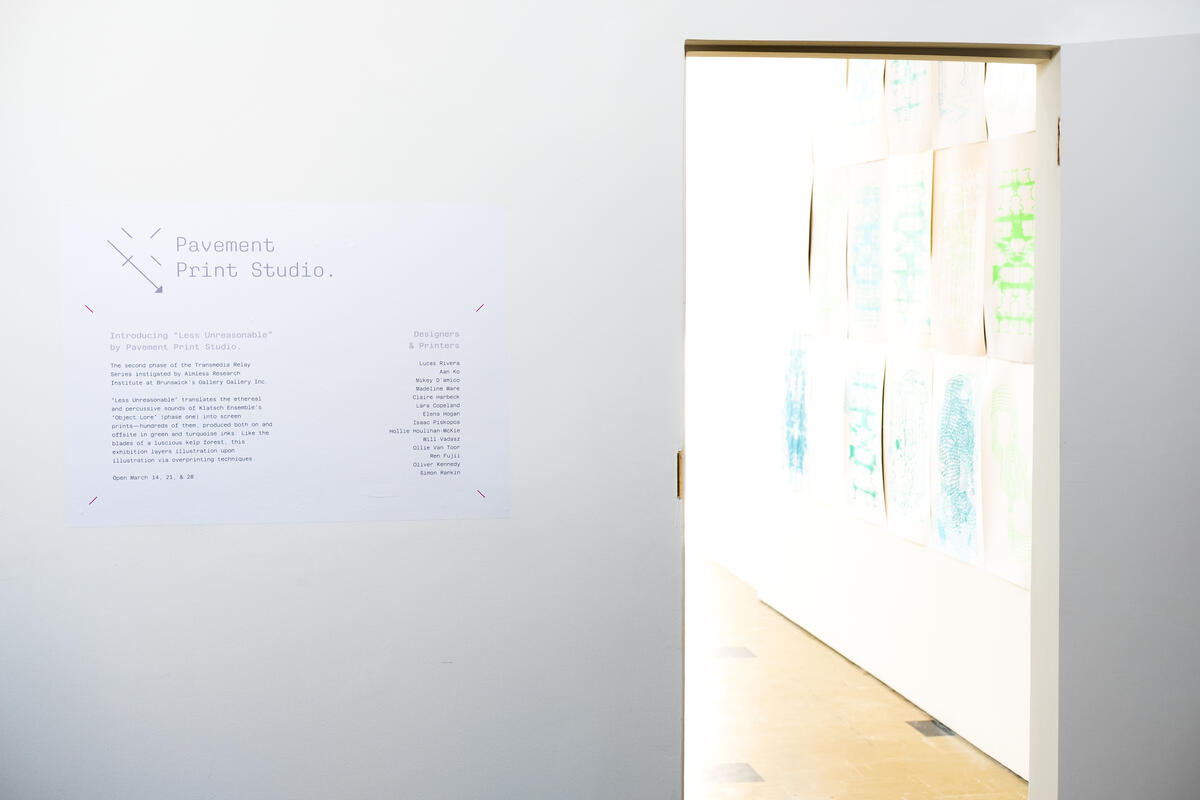
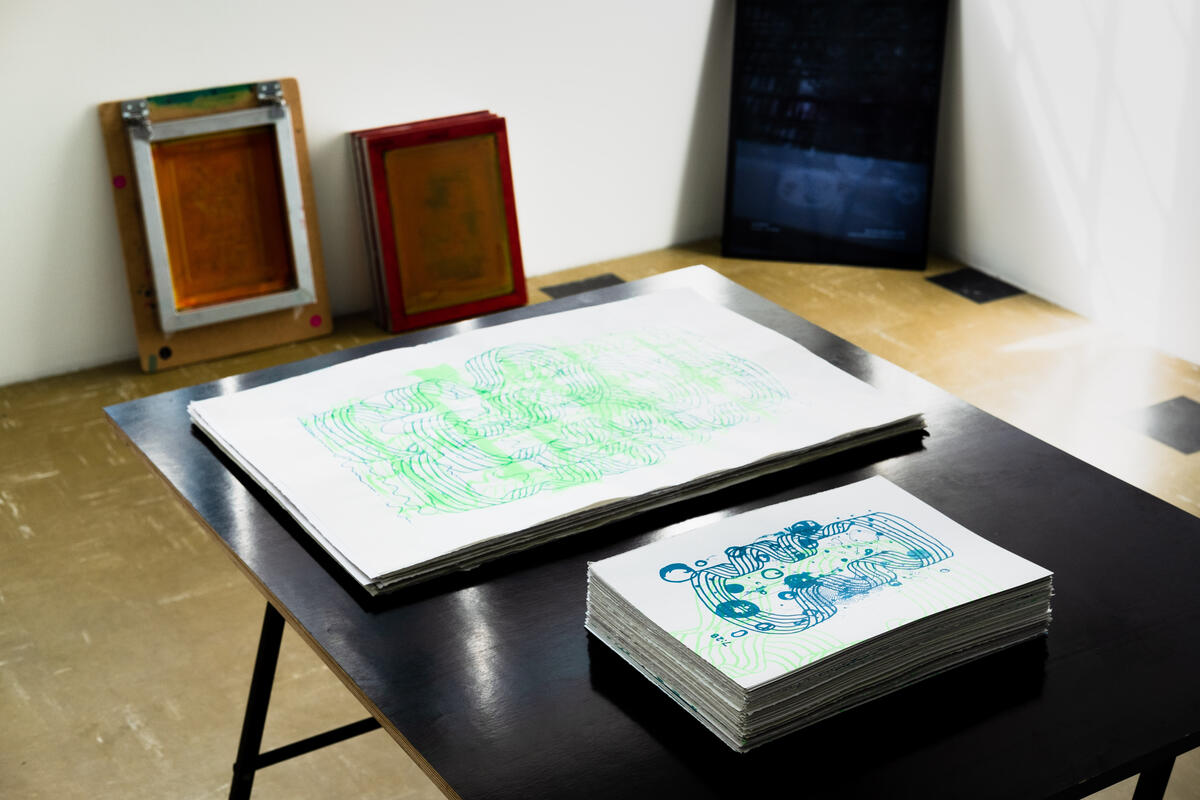
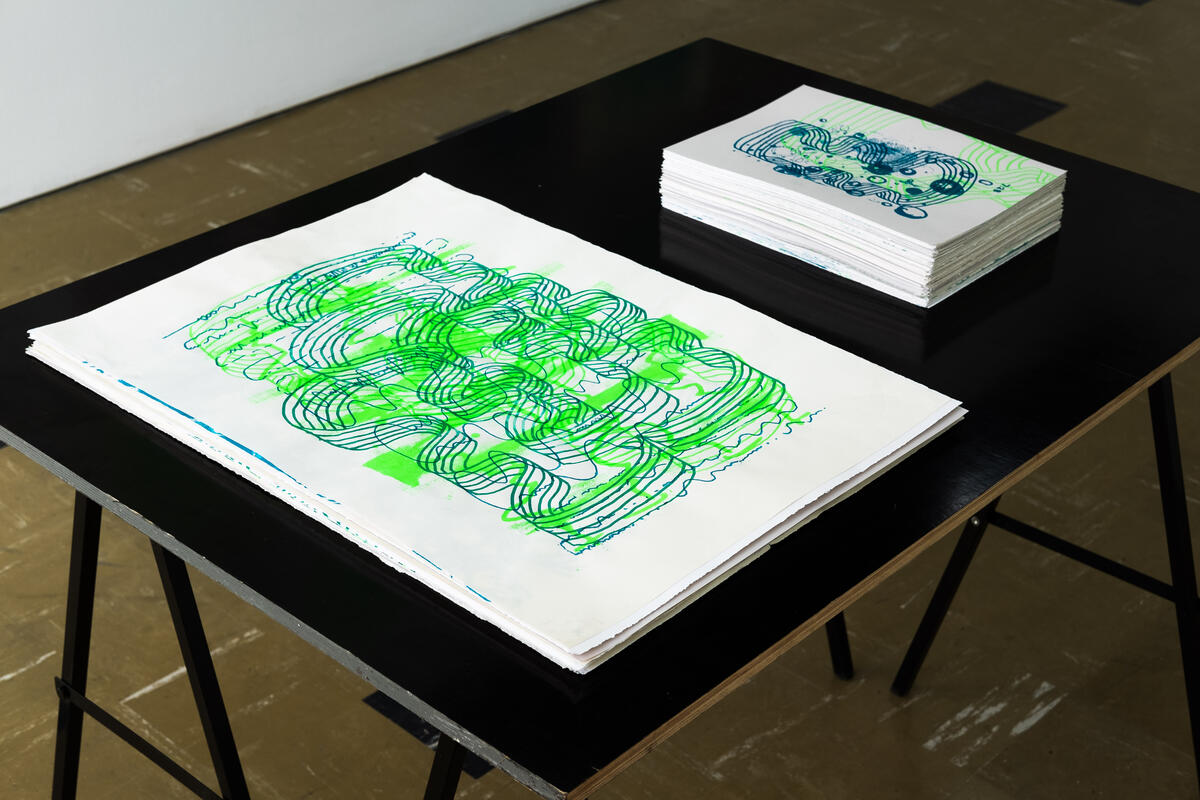
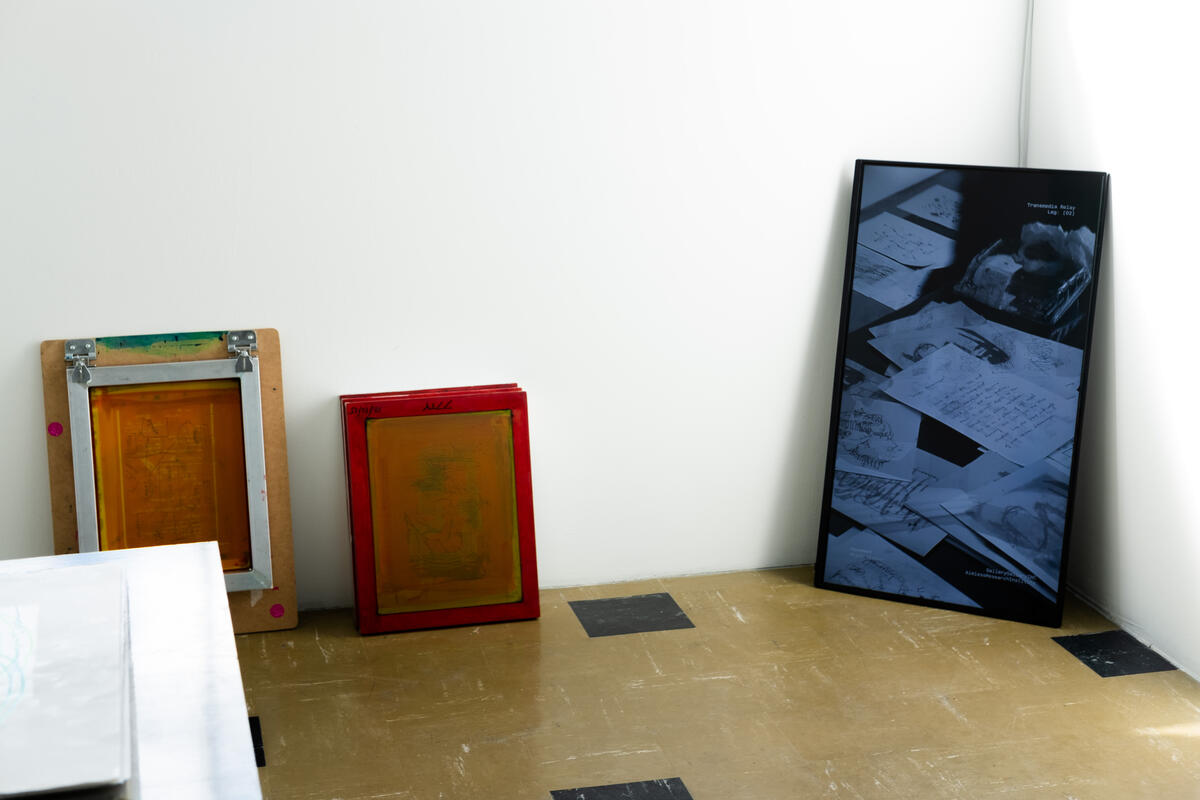
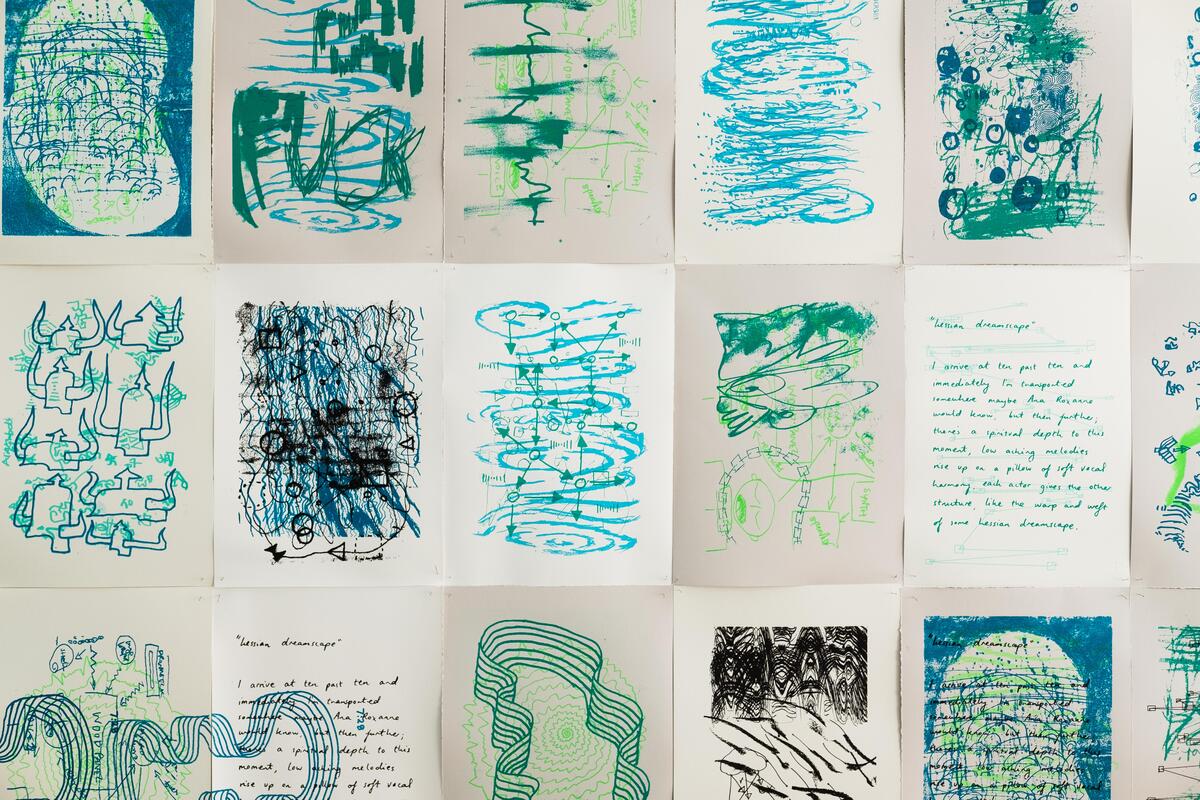
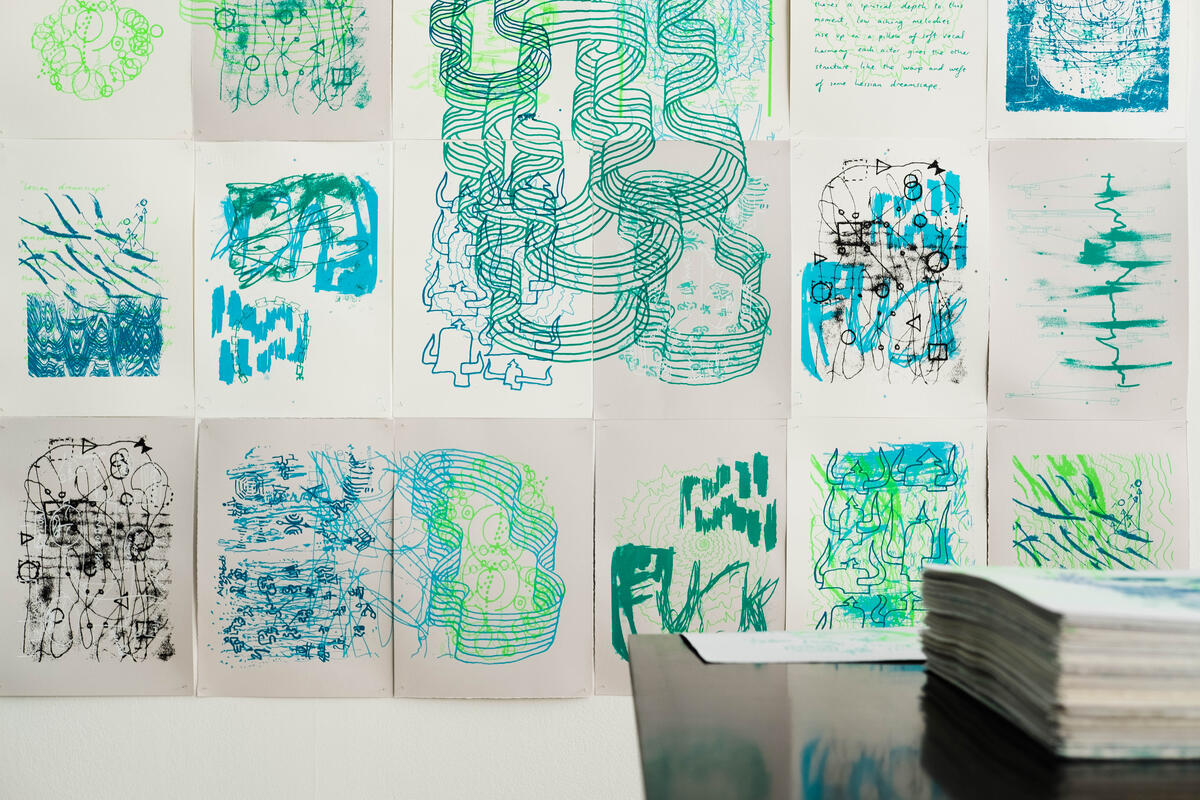
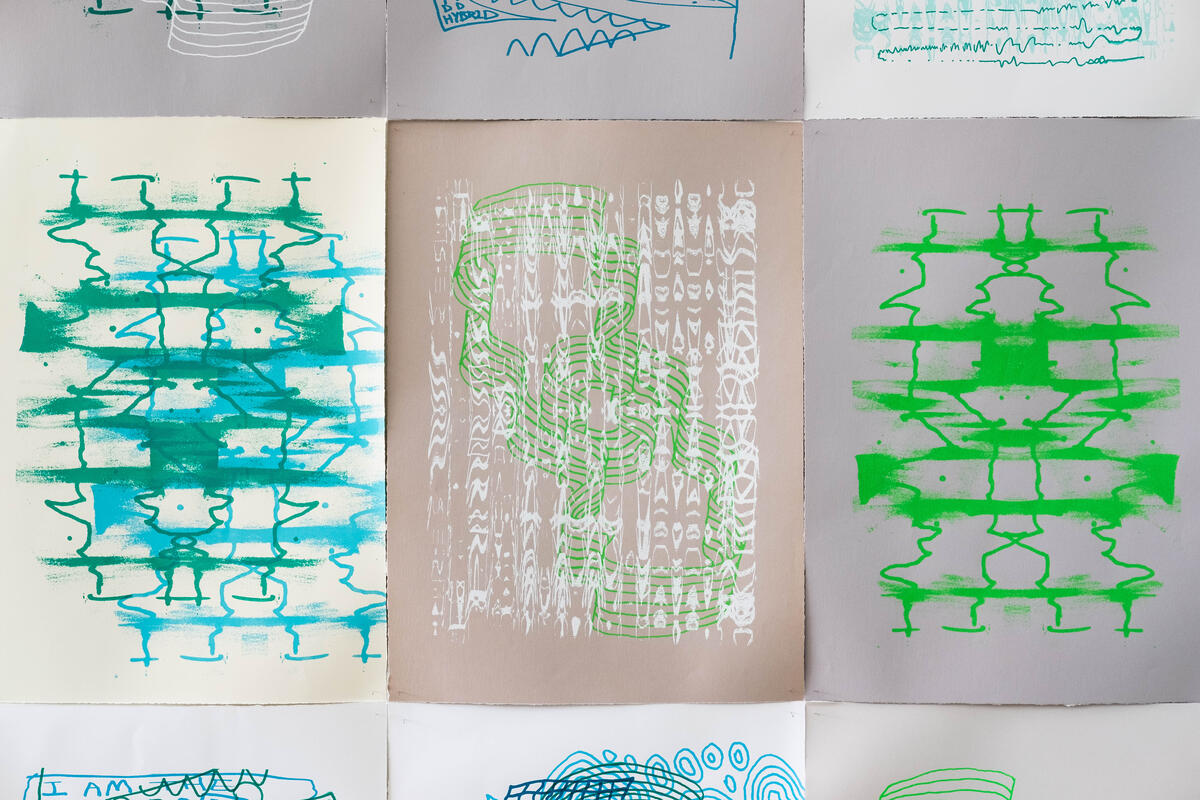
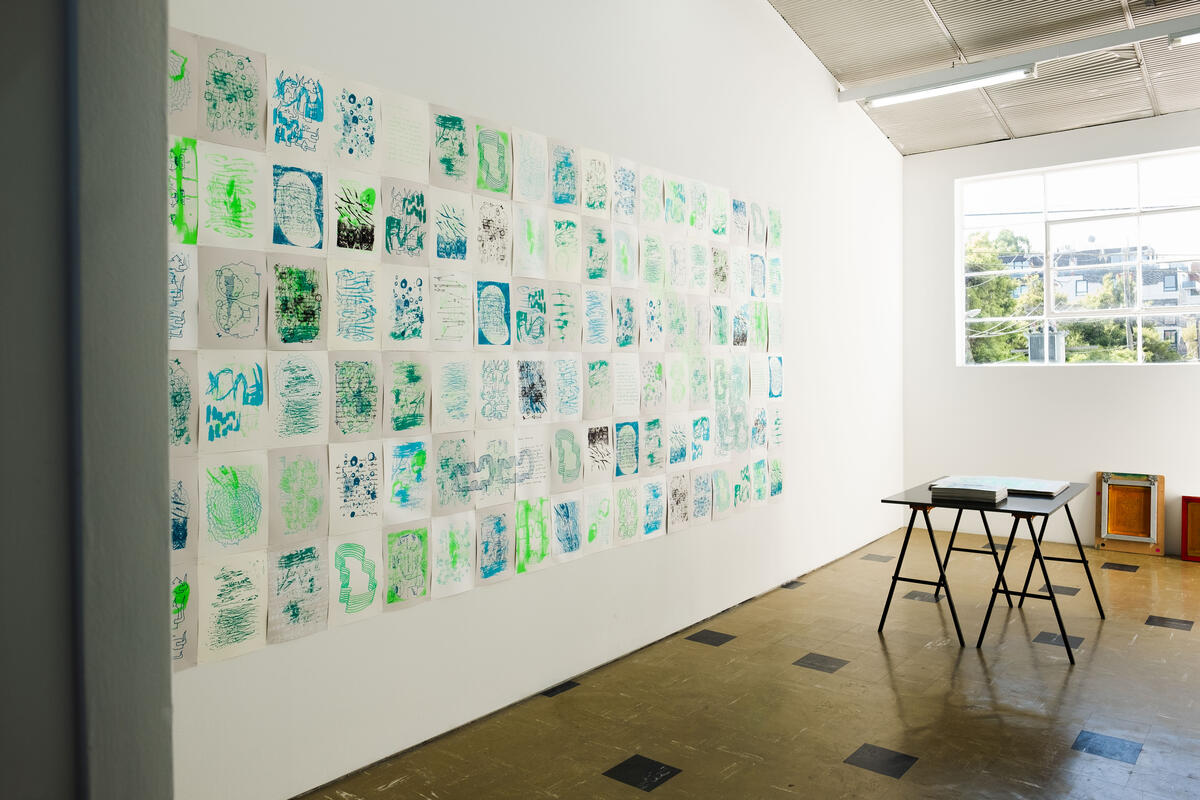
Less Unreasonable is representation of the moment when sonic performance becomes screen-printed visual language. KLATSCH Ensemble's six-hour performance Object Lore happened in this same space. Our response emerged from that encounter. 22 exposed screens, layered prints in forest greens and midnight blues.
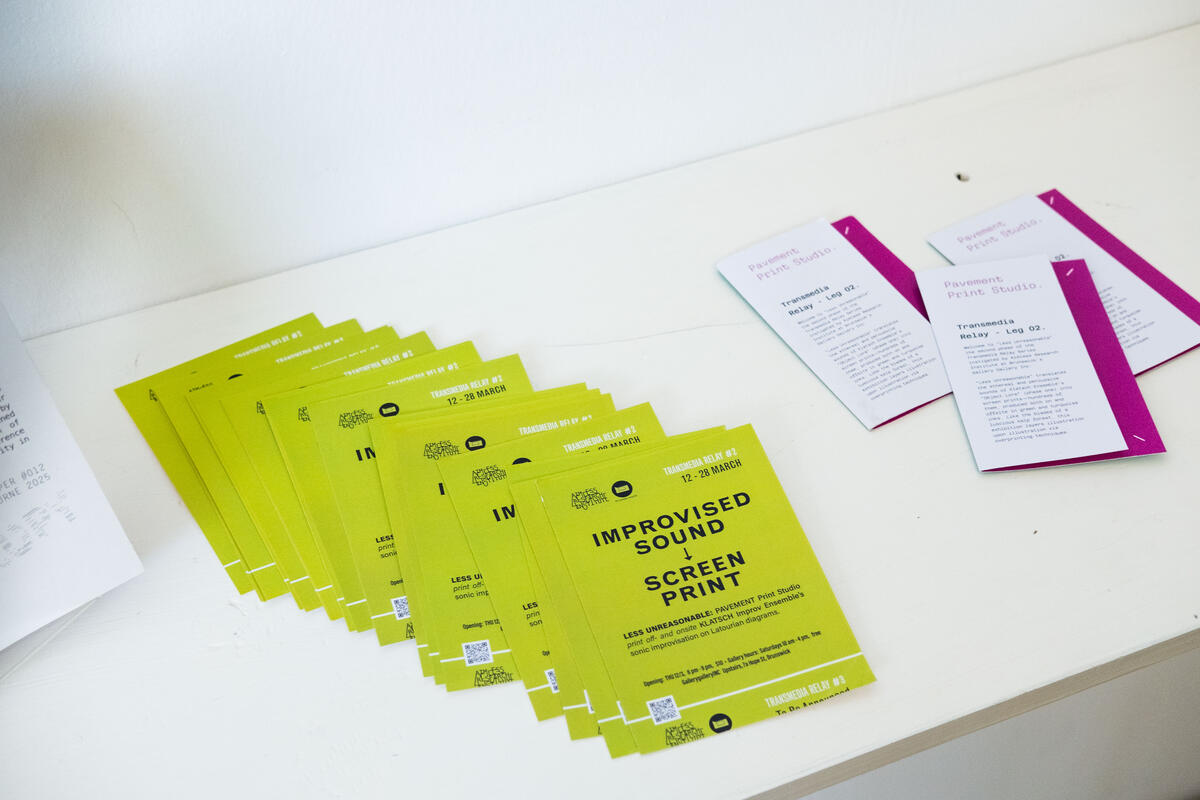
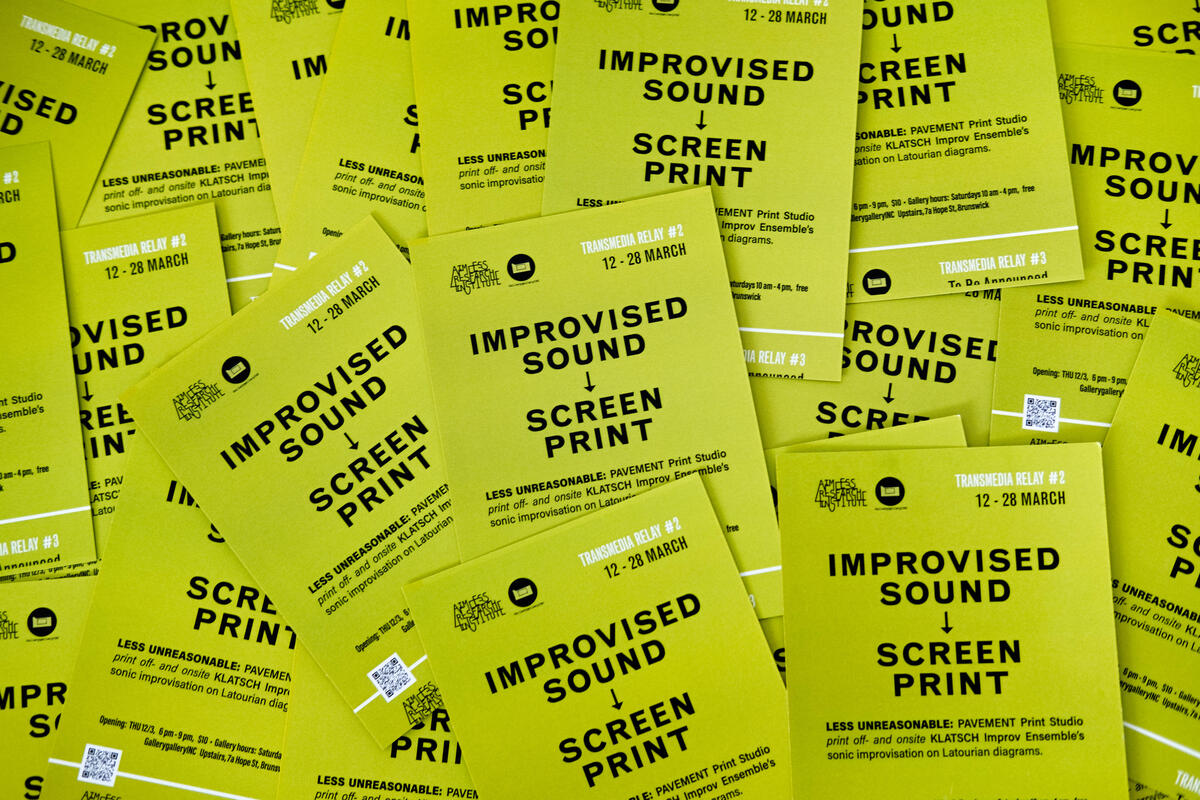
The Transmedia Relay, initiated by Aimless Research Institute, positions creative work as a chain of response. Bruno Latour diagrams became sonic improvisation became screen-printed installation. The relay continues from here to whoever responds next. We're a single node in an ongoing network of artistic conversation.
Translation as Creation
Making prints in response to sound required translation. We couldn't directly represent the sonic. Instead we worked with abstraction, gesture, the visual language that emerged when we sat with the performance's documentation and tried to understand what it generated in us.
The colour palette shifted from our usual bright overprints. Deep greens and blues suggested the weight and density of six hours of improvisation. The marks read as atmospheric, contemplative. Nodes and paths became less about network and more about flow, movement through space, the way sound moves.
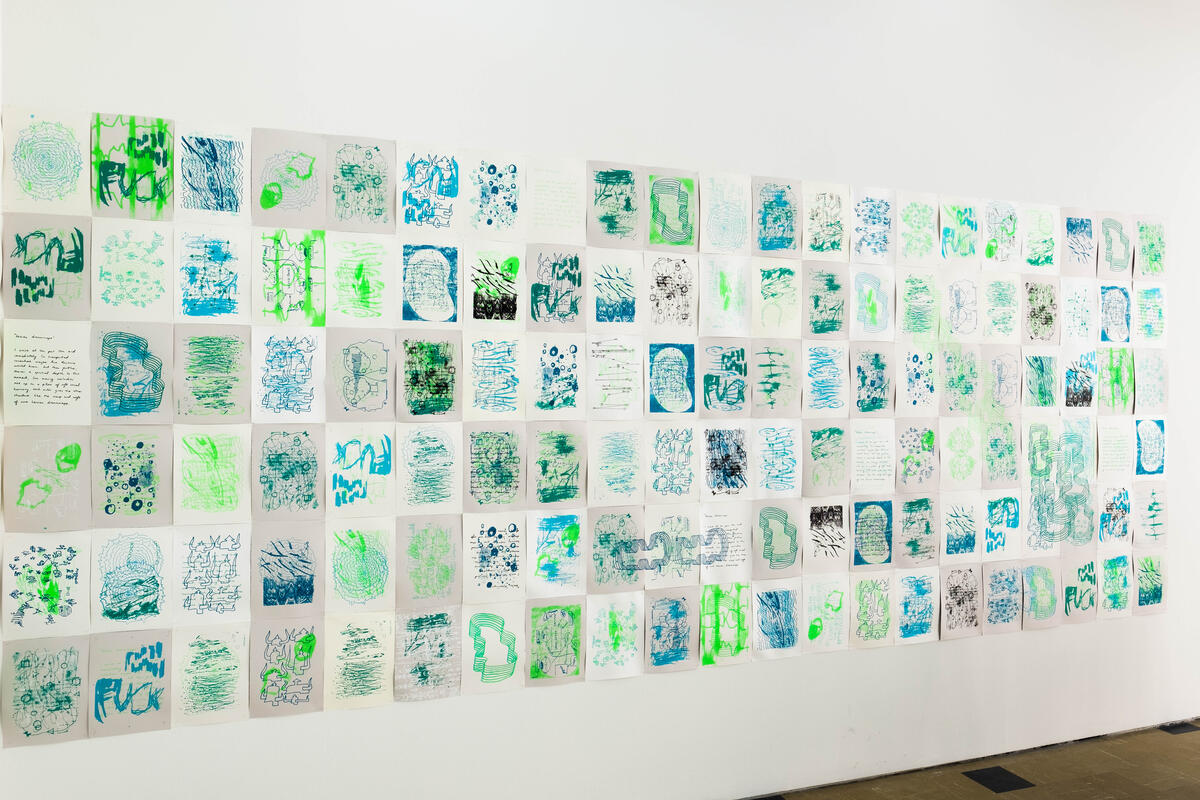
Overprinting remained central to the process. Individual drawings by the crew layered into prints. The technique itself became metaphor. The sonic performance layered into our visual response, which layered into the wall installation.
Working in the Gallery
This was different from our public activations. The gallery context shifted how we positioned the work. Less Unreasonable exists as a specific moment of artistic response, rather than our usual participatory workshops. The Saturday sessions we ran allowed public engagement, but the primary work was the installation itself.
Working with GalleryGalleryINC and Aimless Research Institute meant operating within their curatorial frameworks. That constraint shaped the project. We responding to those constraints, but with a spirit of collaboration.
The walls became a crucial design decision. We worked with density and proximity, allowing the pieces to breath whilst creating relationships between them. The installation becomes as much about spacing and curation as about the individual prints.
After the Performance
We're still thinking through what this project meant. The relay logic suggests each node should transform what came before. Did our prints adequately respond to Object Lore?
The work exists now as documentation. Elena Hogan's photographs and the prints themselves are the evidence of the encounter between KLATSCH's sonic work and our screen printing practice.
The relay continues somewhere else now. We made our response and passed it on.
Pavement Print Studio
Exhibited at GalleryGalleryINC, 7a Hope St, Brunswick
Part of the Transmedia Relay Series, initiated by Aimless Research Institute
With thanks to KLATSCH Ensemble, Aimless Research Institute and Gallery Gallery INC.
Operating on unceded Wurundjeri Woi-wurrung land.
Tags
- transmedia relay
- exhibition
- gallery
- collaboration
- documentation
Share
Recent Posts
- First Impressions at City North
- Printing at Topia Festival
- Open Day on the presses
- RMIT Student Life Puts the Spotlight on Pavement Print Studio
- Open Edition: Making Impressions: Design, Print, and Collaboration
About Pavement Print Studio
A student-led mobile printmaking project from RMIT Associate Degree Graphic Design, bringing collaborative screen printing to public spaces.