Open Edition: Making Impressions: Design, Print, and Collaboration
27 May 2026 · By Pavement Print Studio Team
Melbourne Design Week 2026 & Brunswick Design District 'Design Behind Closed Doors’
15–18 May: Workshops at M-Pavilion RMIT Brunswick
20–24 May: Exhibition at Balam Balam Place
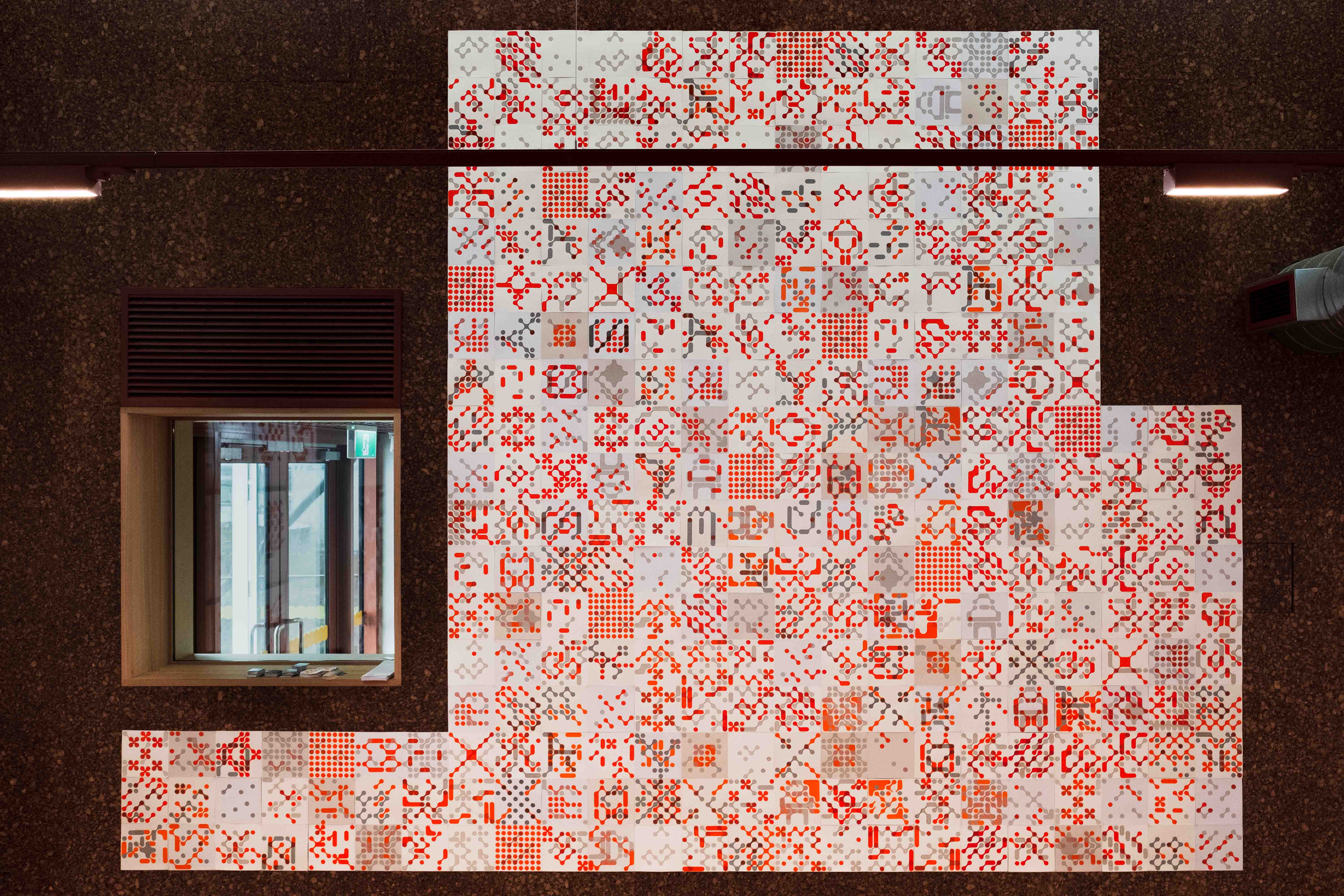
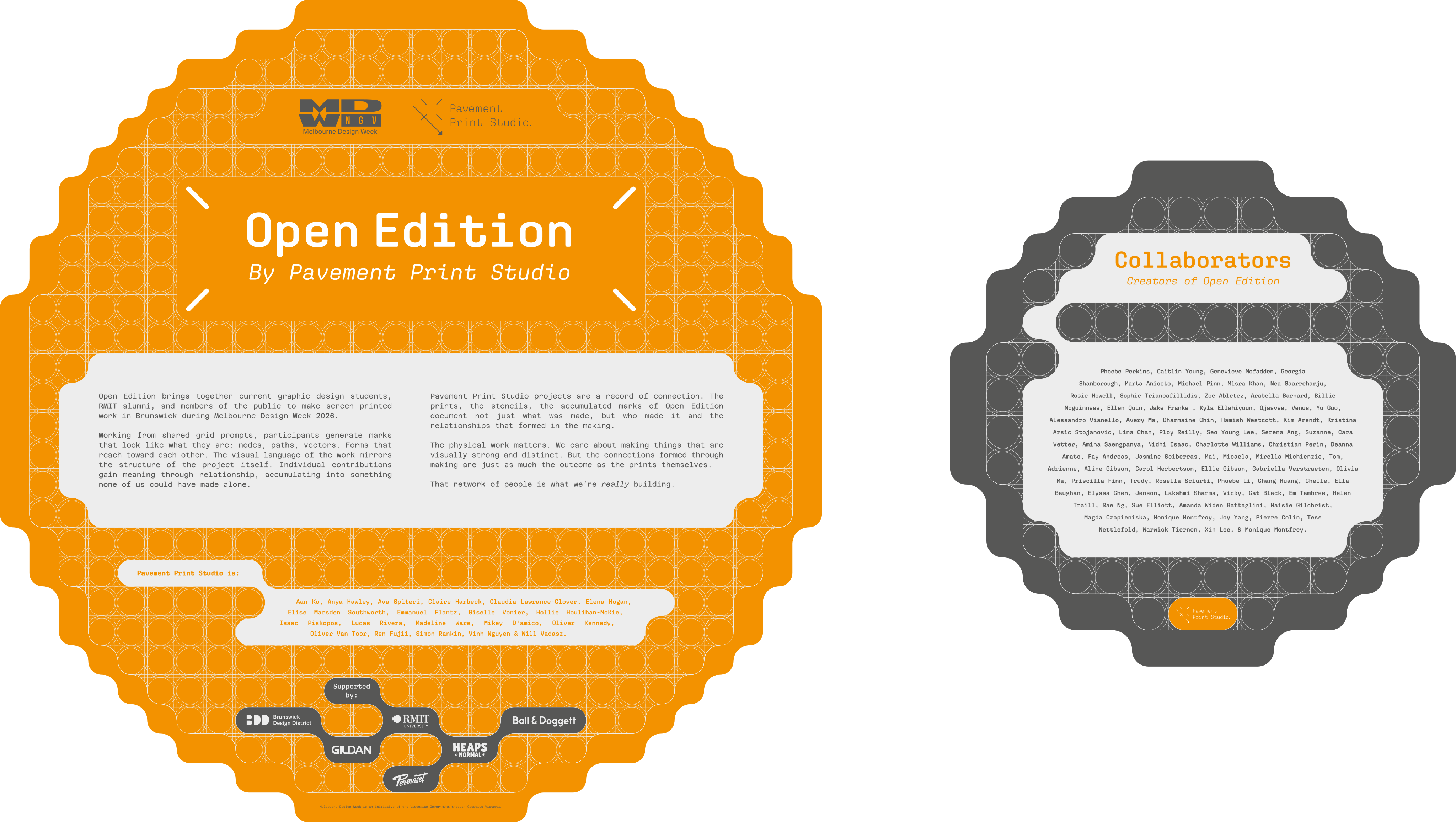
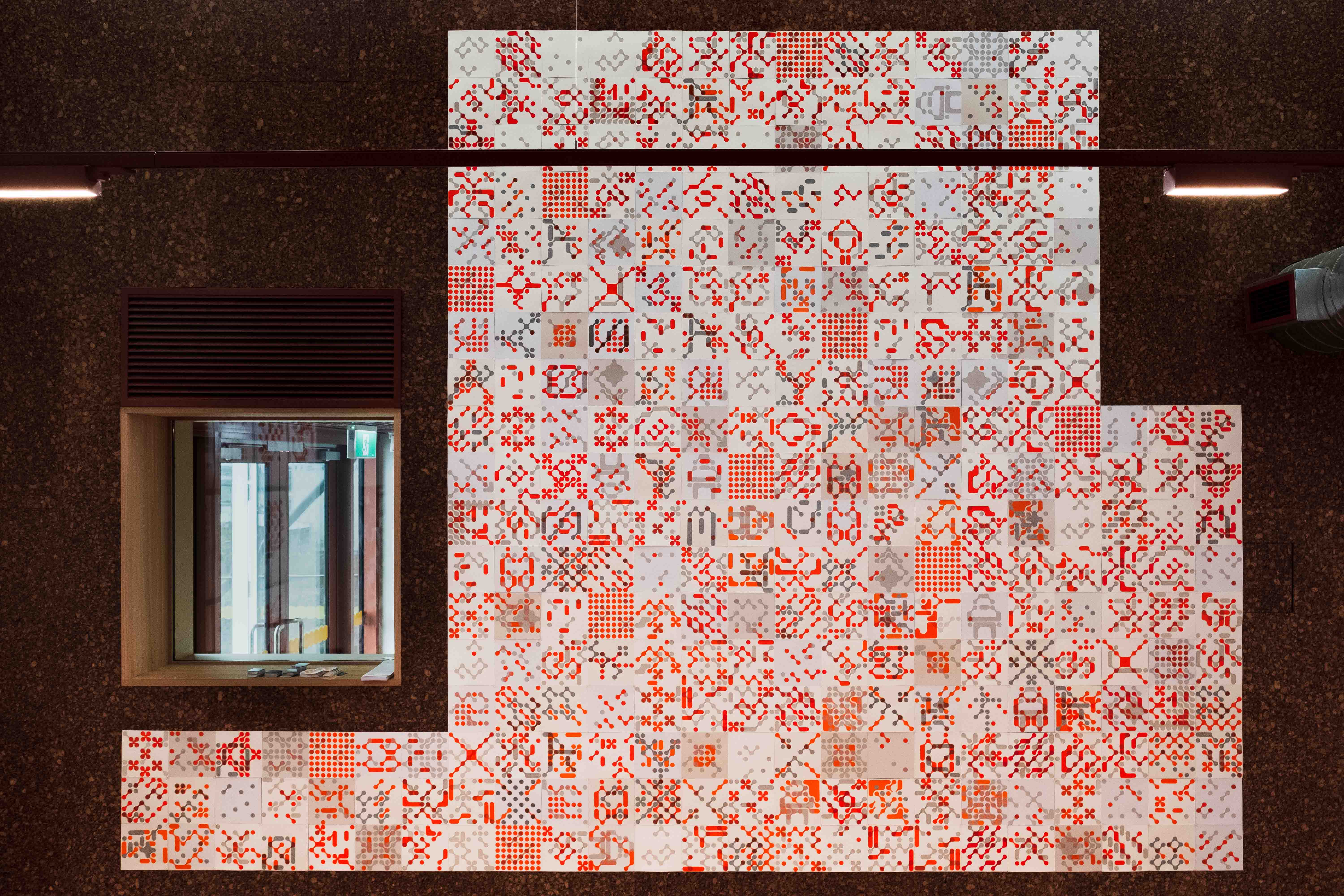
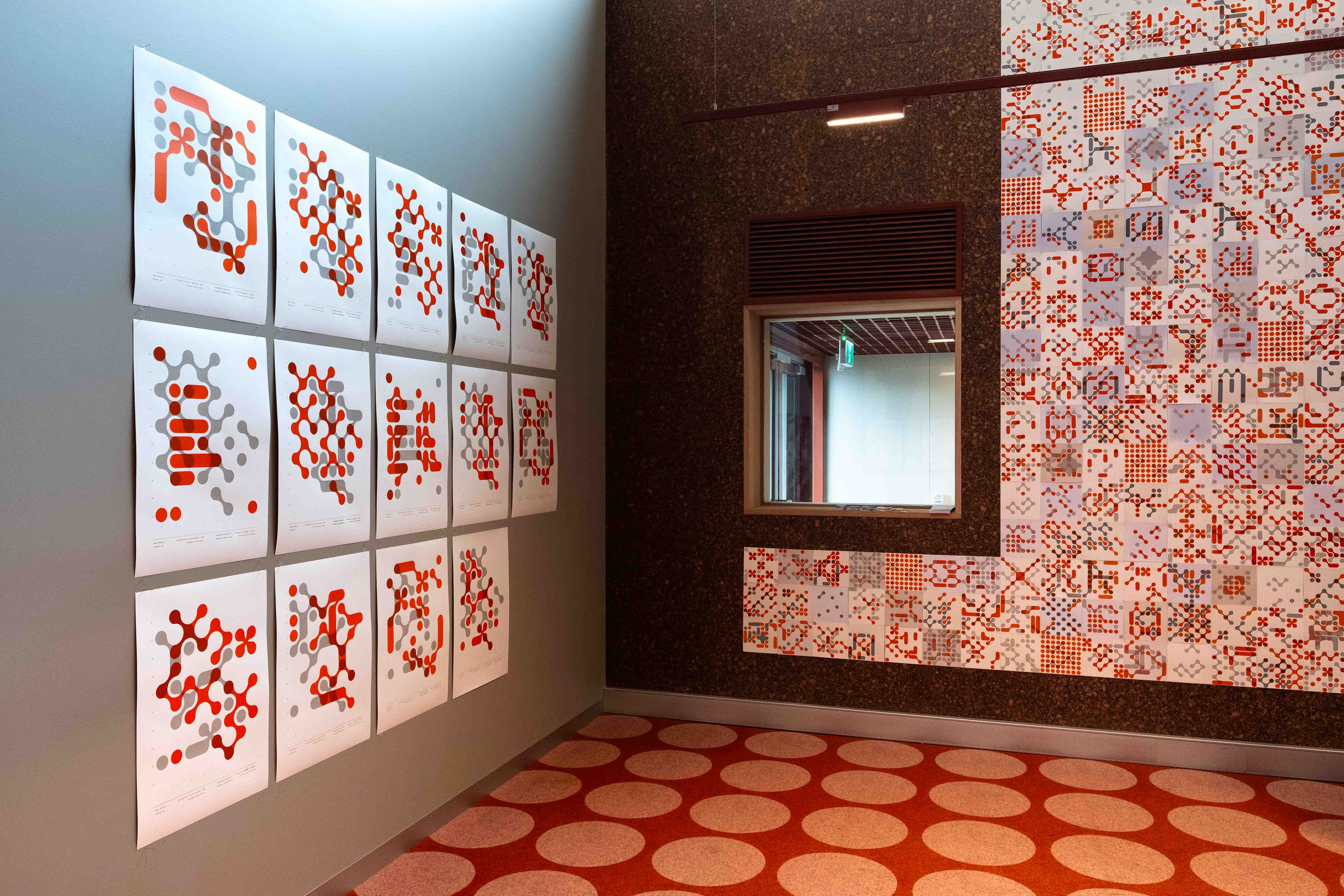
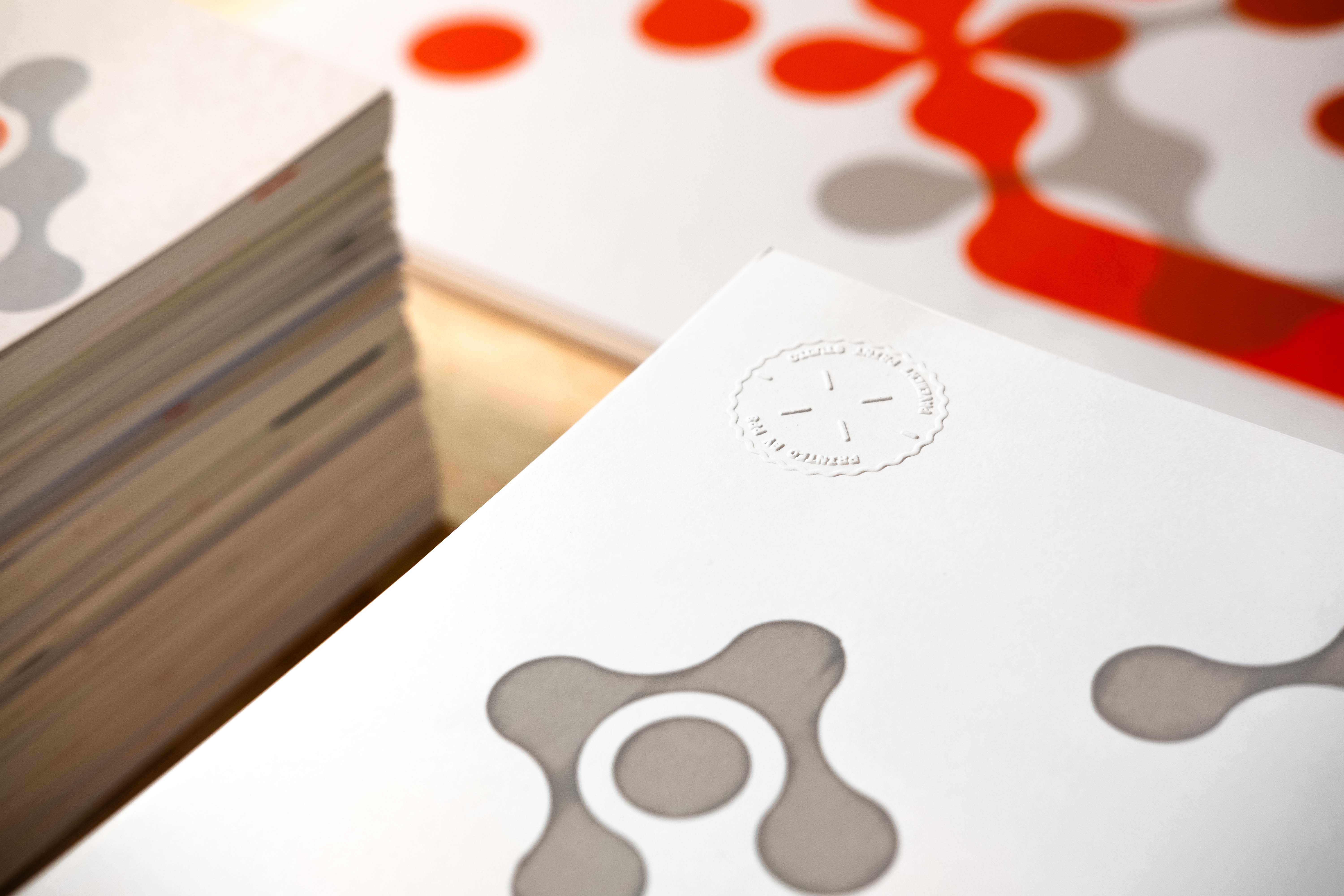
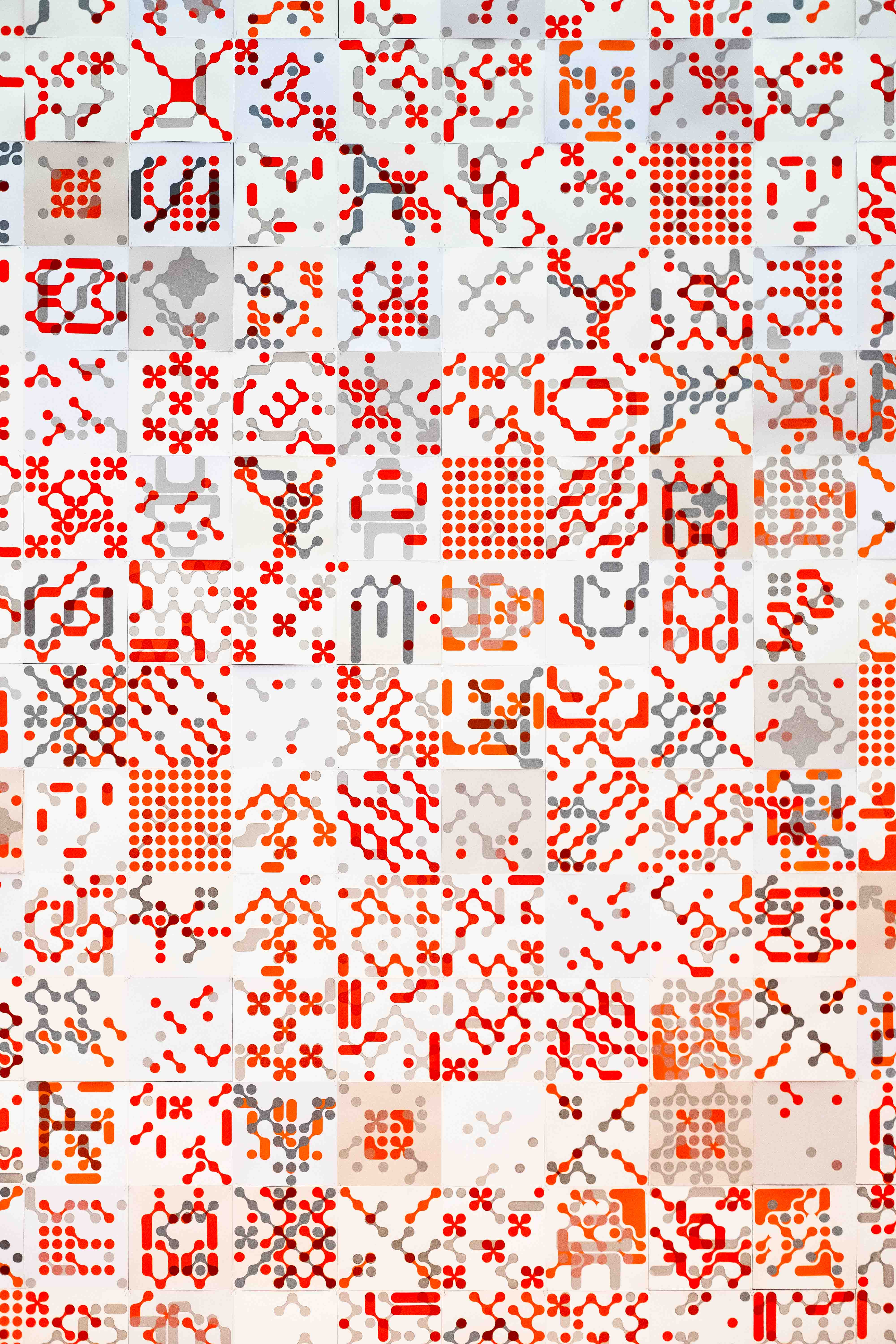
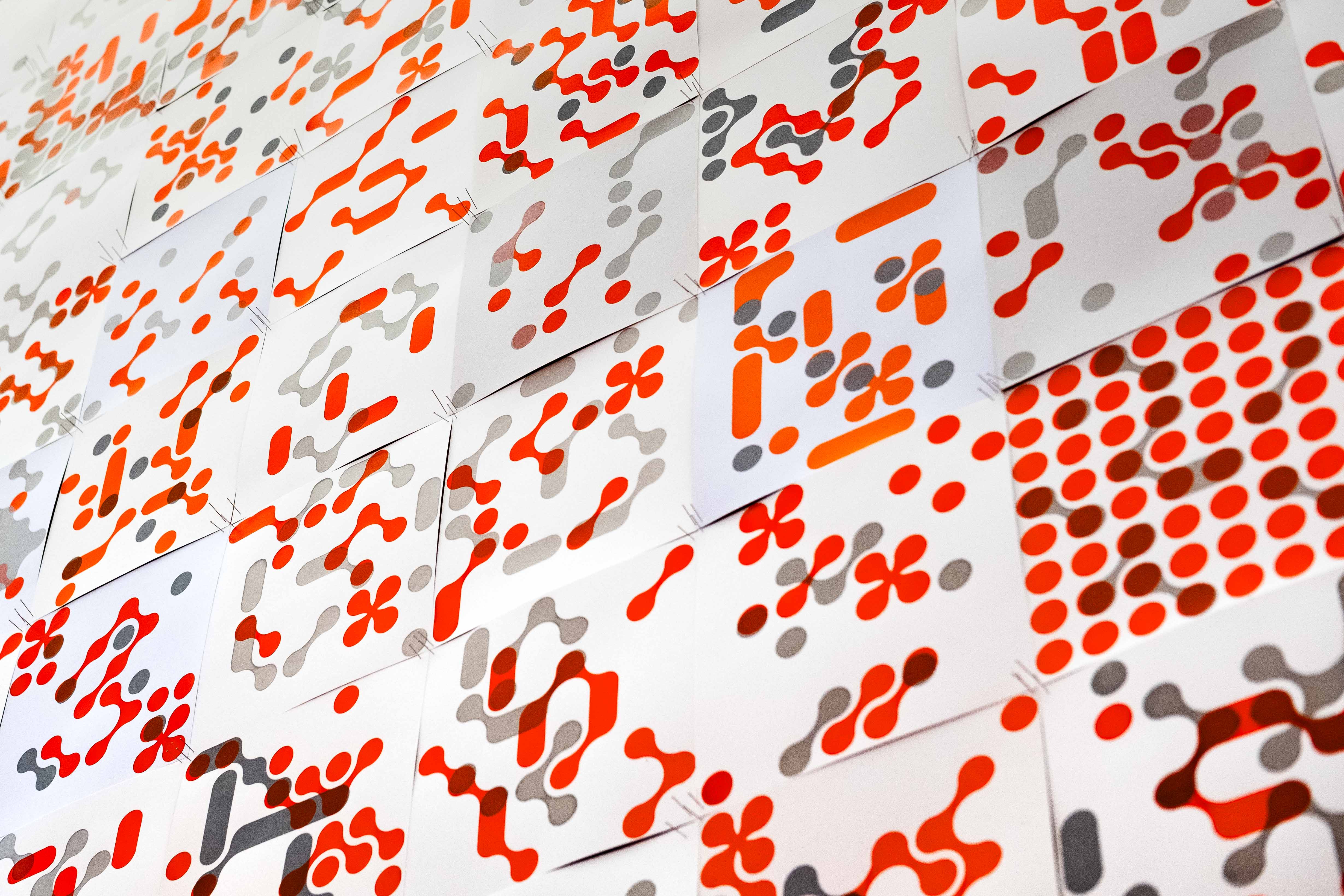
Open Edition invited members of the public to become contributors to a collaborative screen printing activation and exhibition during Melbourne Design Week 2026 and Brunswick Design District 'Design Behind Closed Doors’. Over four days we ran eight workshops with eighty participants, creating 631 two colour collaborative prints that became a large-scale installation at Balam Balam Place in Brunswick.
The project operated as part of both Melbourne Design Week and the Brunswick Design District open studio programme. The first two days (15–16 May) were part of the Brunswick Design District's Design Behind Closed Doors initiative. The following two days (17–18 May) continued as Melbourne Design Week programming. All eight workshops booked out completely with significant waitlists.
The Design System
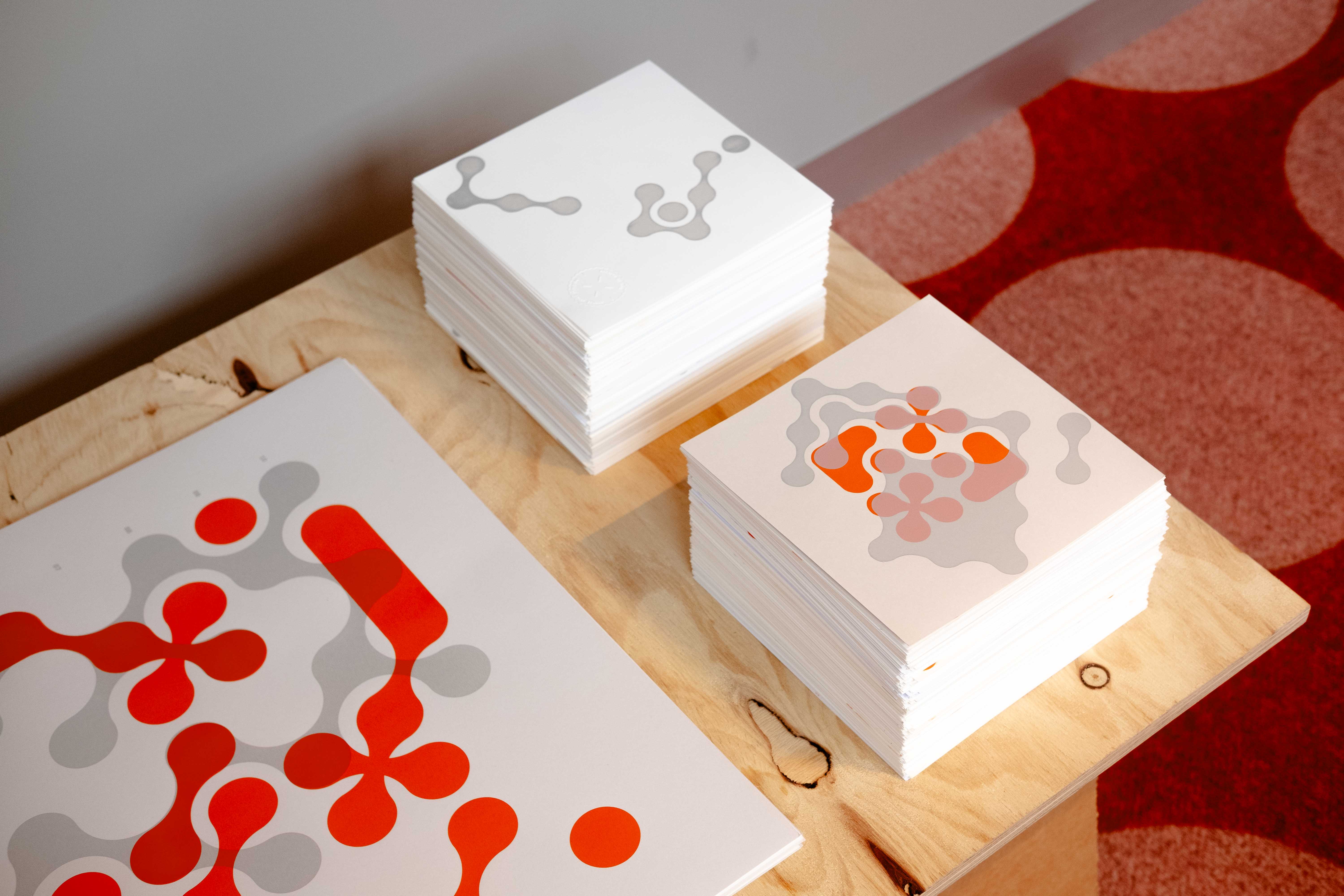
The project was held together by a design system conceived by Pavement Print Studio. This was a structural design system that gave us a method for creating cohesive artwork with dozens of different participants and workshop facilitators — whilst allowing each person's contribution to remain distinct and readable.
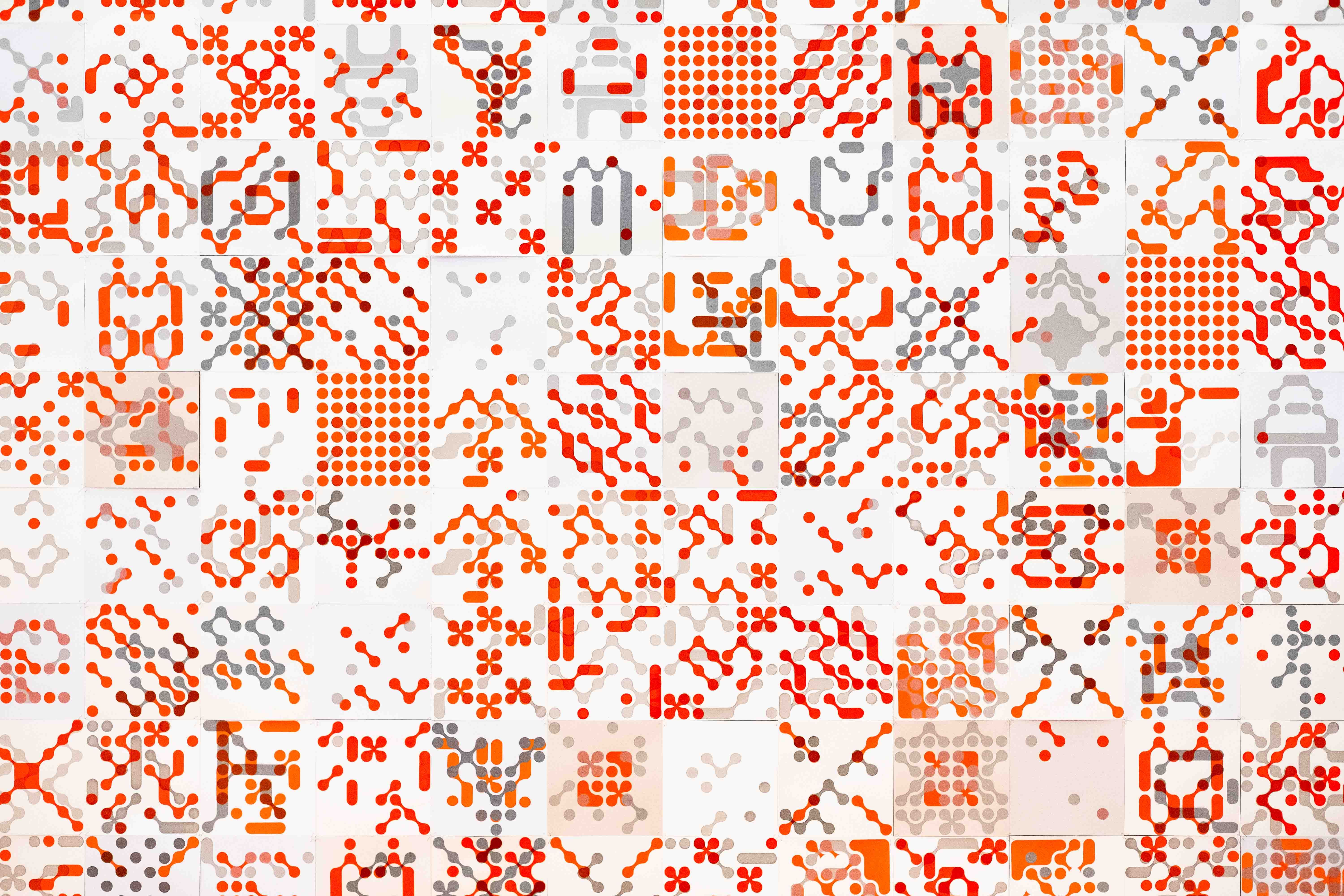
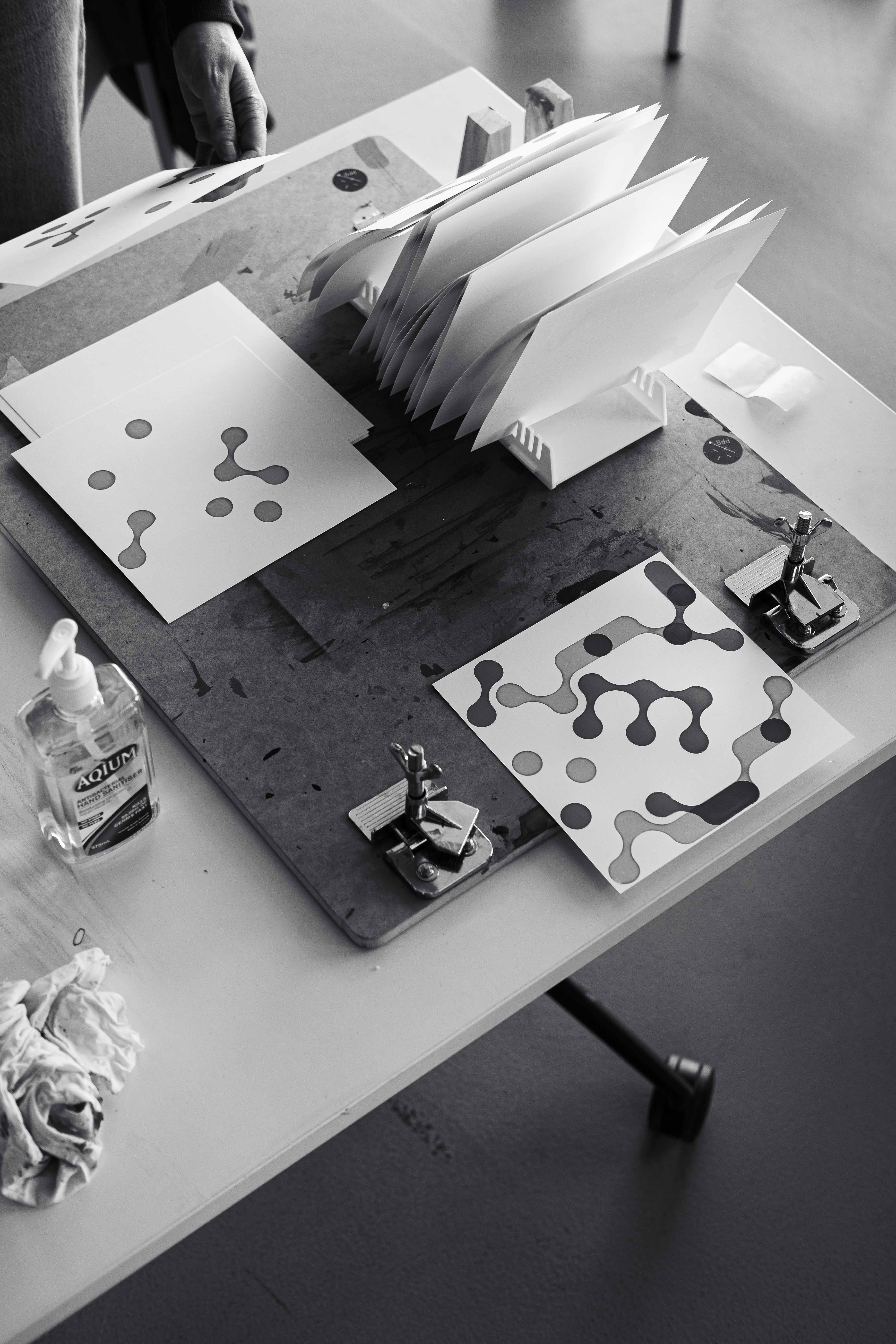
The system employed a grid of nodes, paths, vectors and network motifs. These visual elements became a working metaphor for the collaborative project itself, visualising the connections between participants whilst simultaneously providing the framework that made those connections possible through shared visual language.
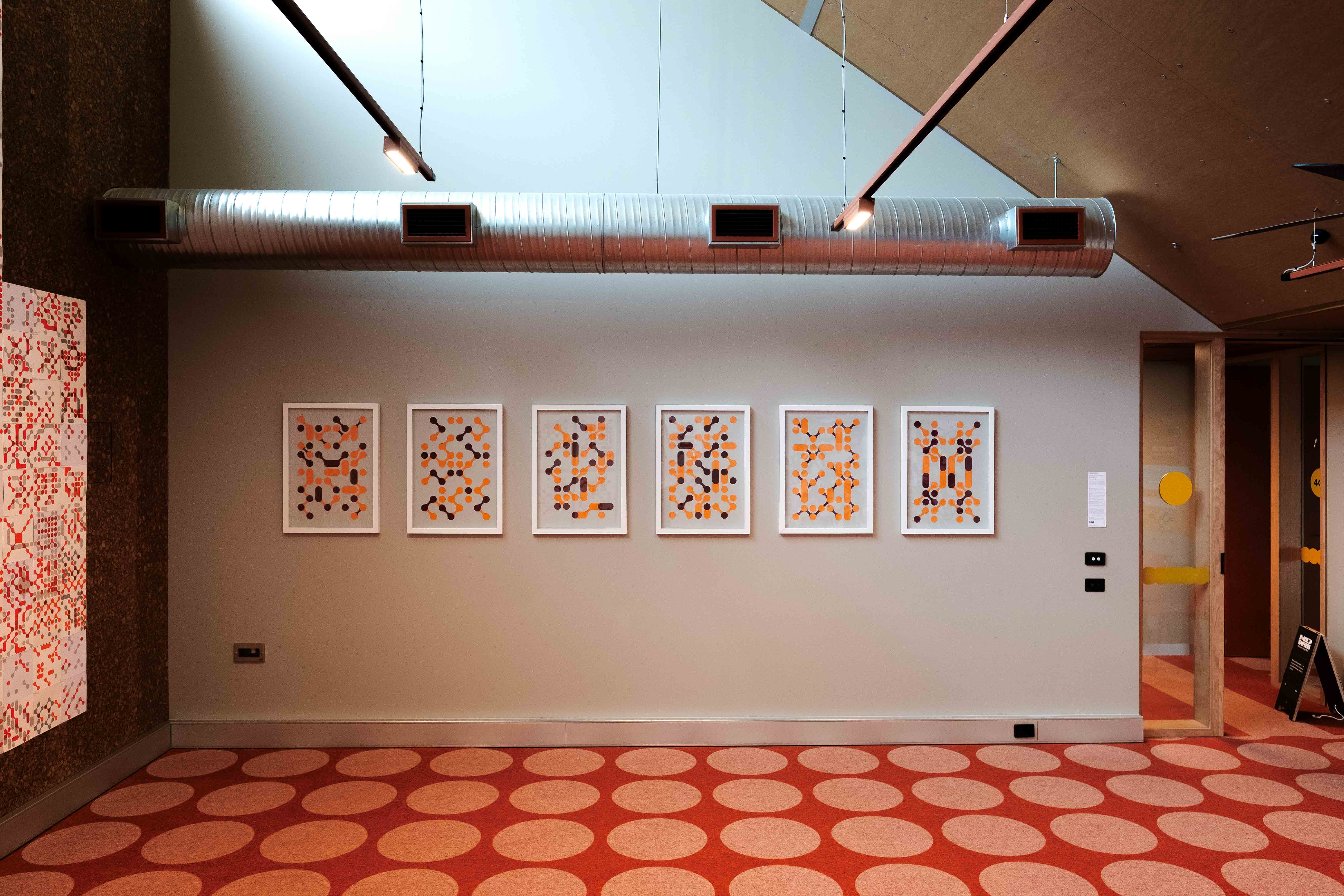
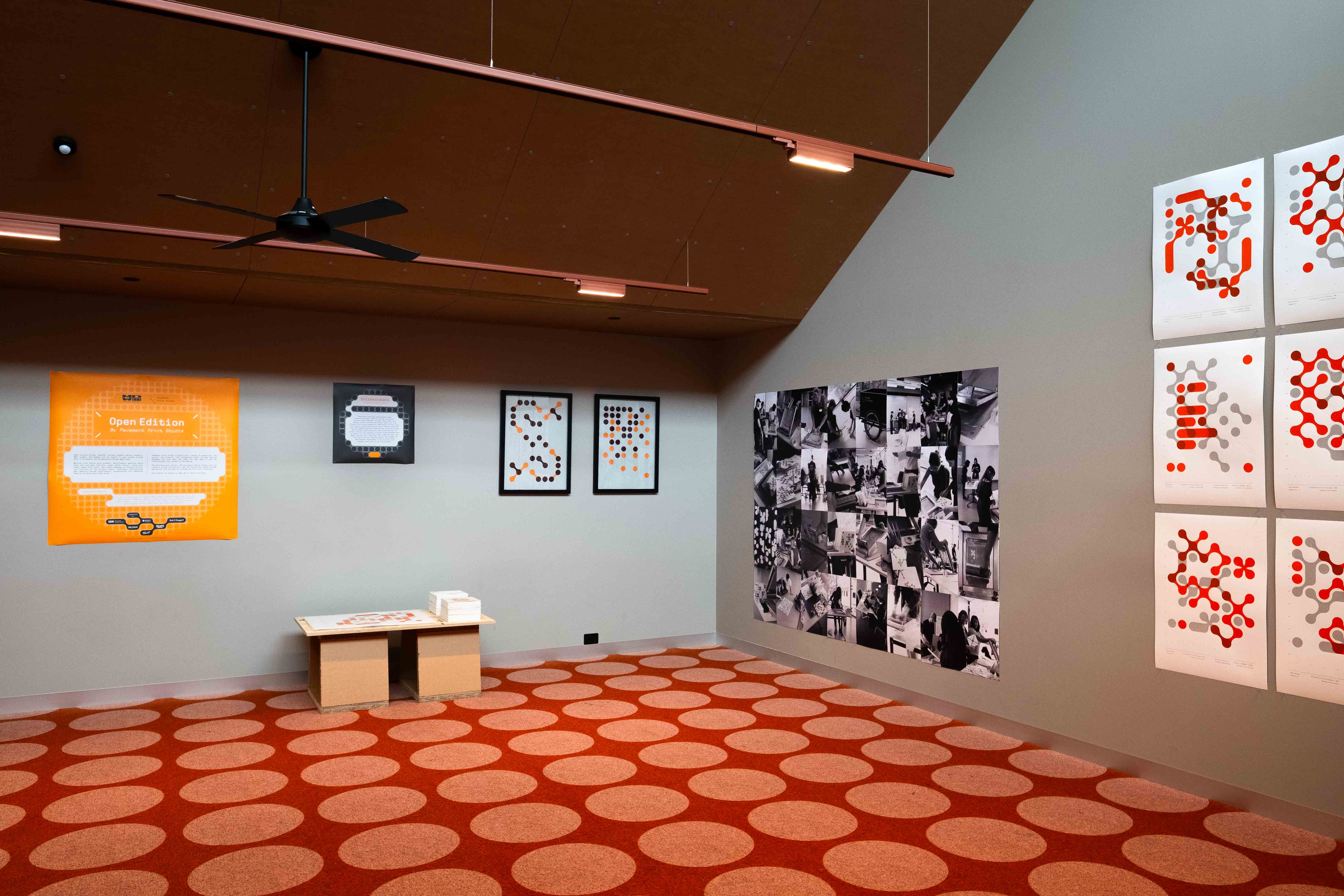
The "Circle Slime Grid" was developed through iterative testing, eventually aligning the grid structure with the polka dot pattern found in the carpet at Balam Balam Place where the work would be exhibited. The grid includes carefully calculated margins that create the illusion of continuous network when individual prints are installed flush together. Small individual compositions contribute to macro-scale composition across exhibition walls.
The Workshops
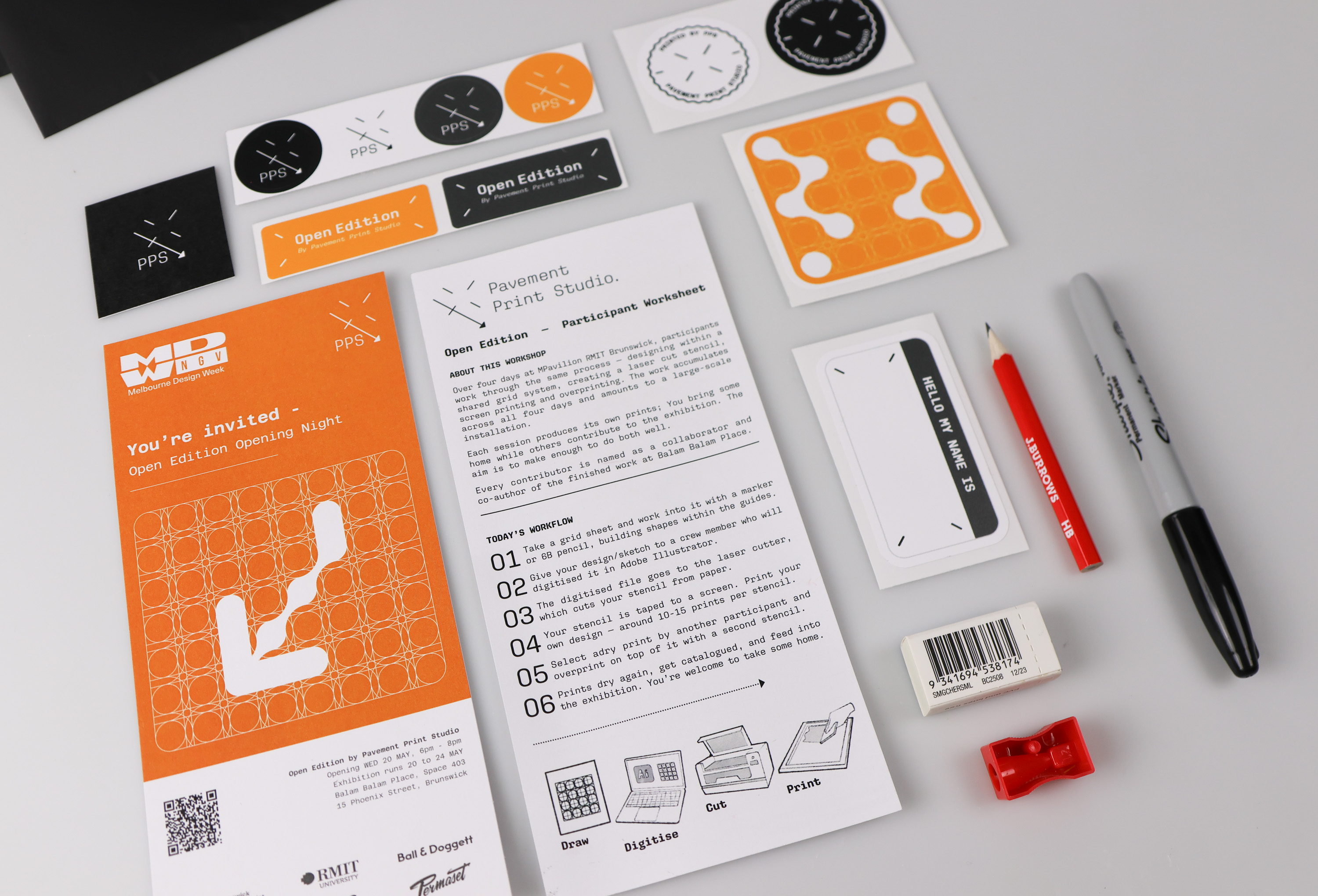
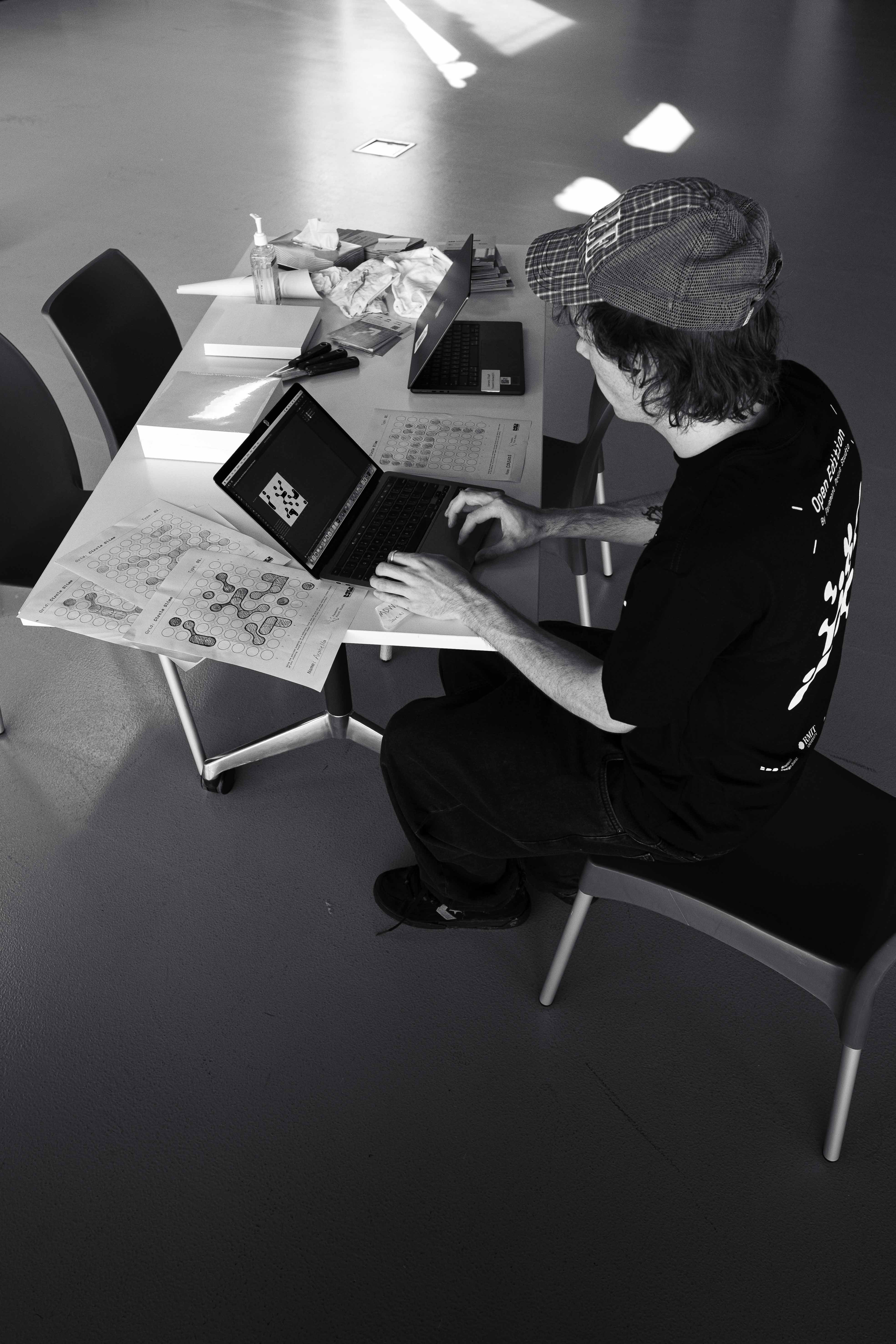
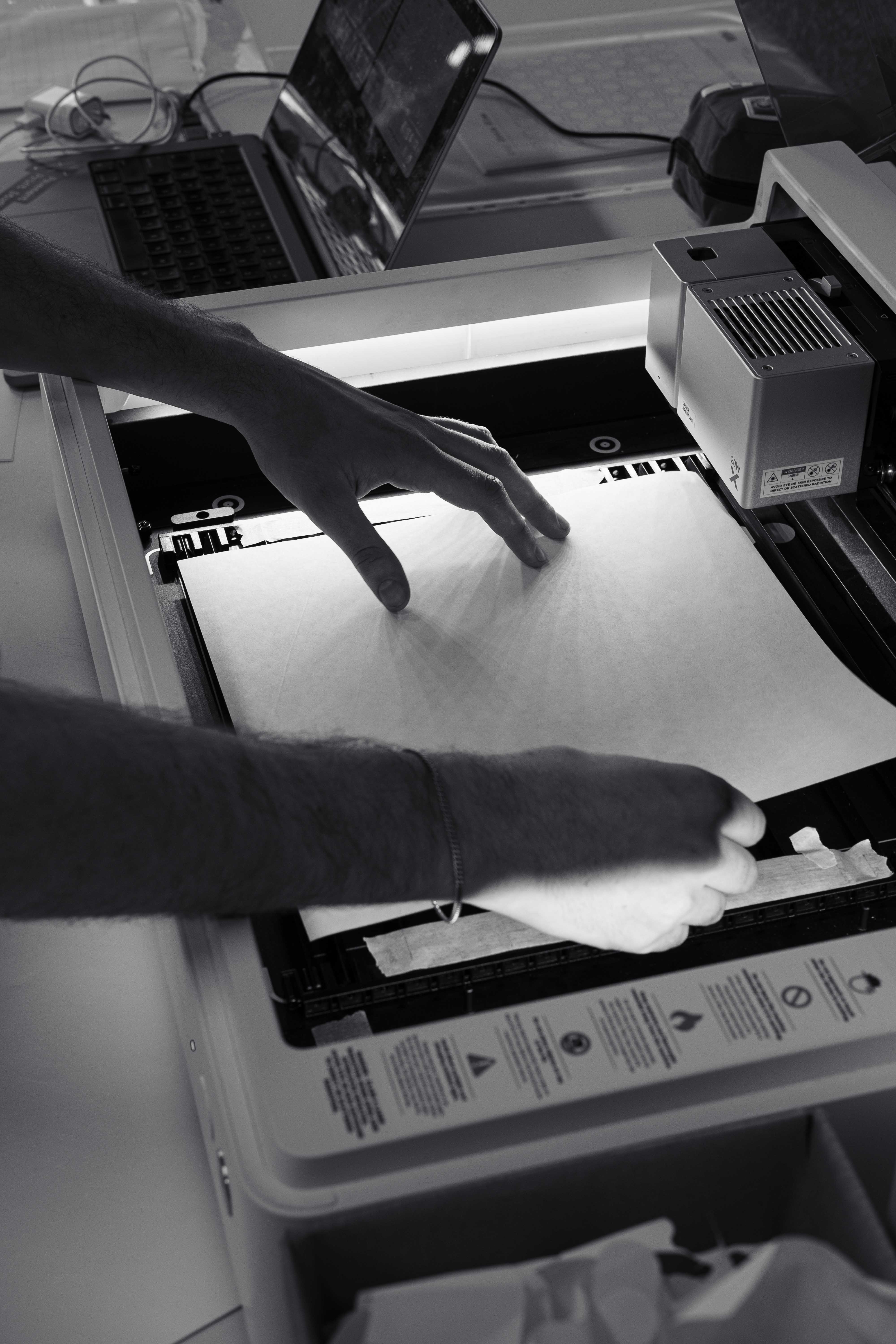
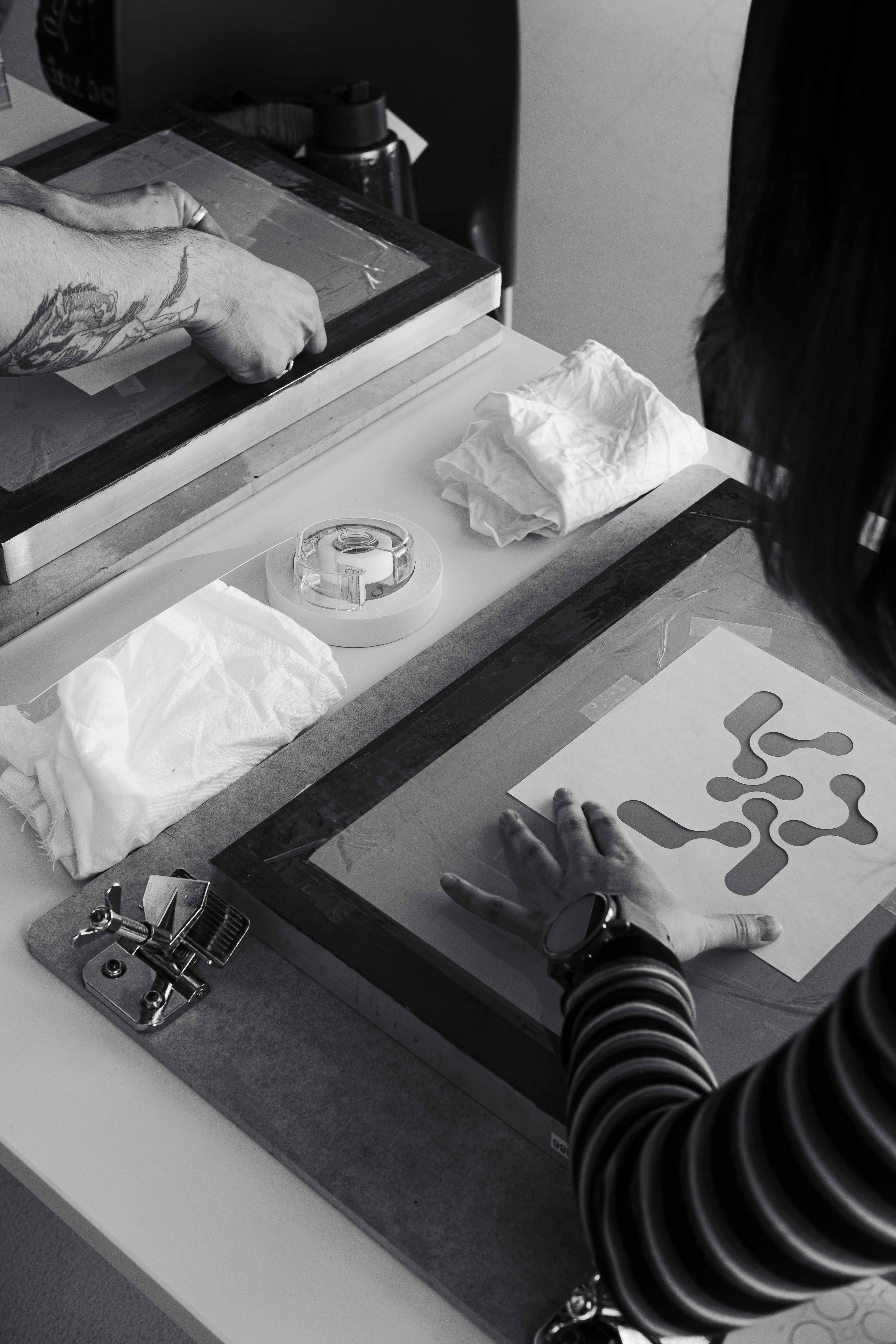
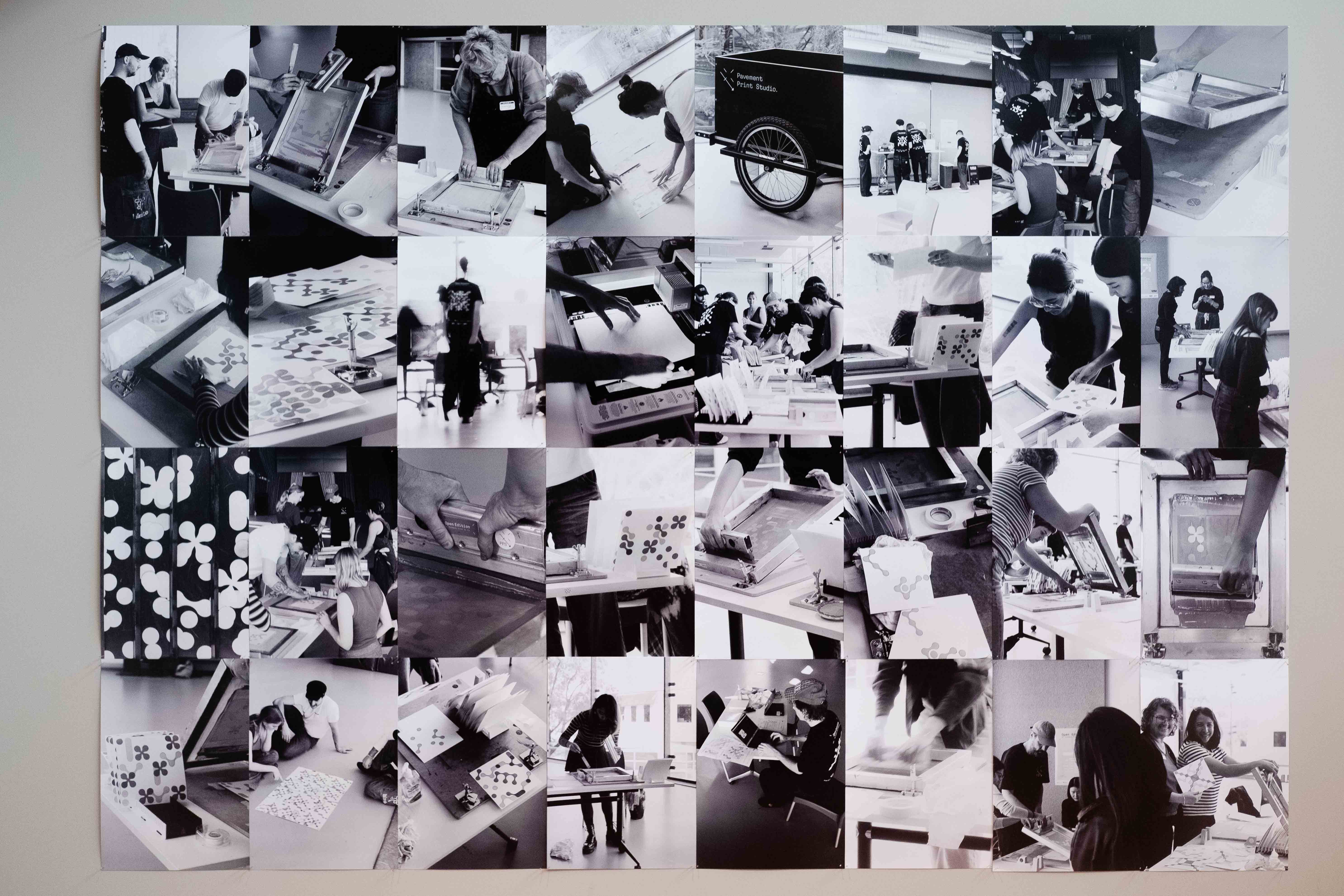
Each workshop ran for two and a half hours. Participants worked through the full process: designing their composition within the grid system, laser cutting stencils from their designs, screen printing using water-based Permaset inks, and overprinting their work with others' contributions to create unexpected colour combinations and visual dialogue.
We operated from M-Pavilion RMIT Brunswick when weather permitted, retreating to the Hanger space when rain arrived. The mobile nature of the setup proved its worth across changing conditions and venues.
Heavy facilitation from the Pavement Print Studio crew made the workshops function. Everyone got hands-on experience with screen printing through stencils. The highlight wasn't only technical process, it was also about the conversations and connections. Participants talked with each other and with crew about their backgrounds, their art practices, the project itself, design education, screen printing techniques, and what comes next.
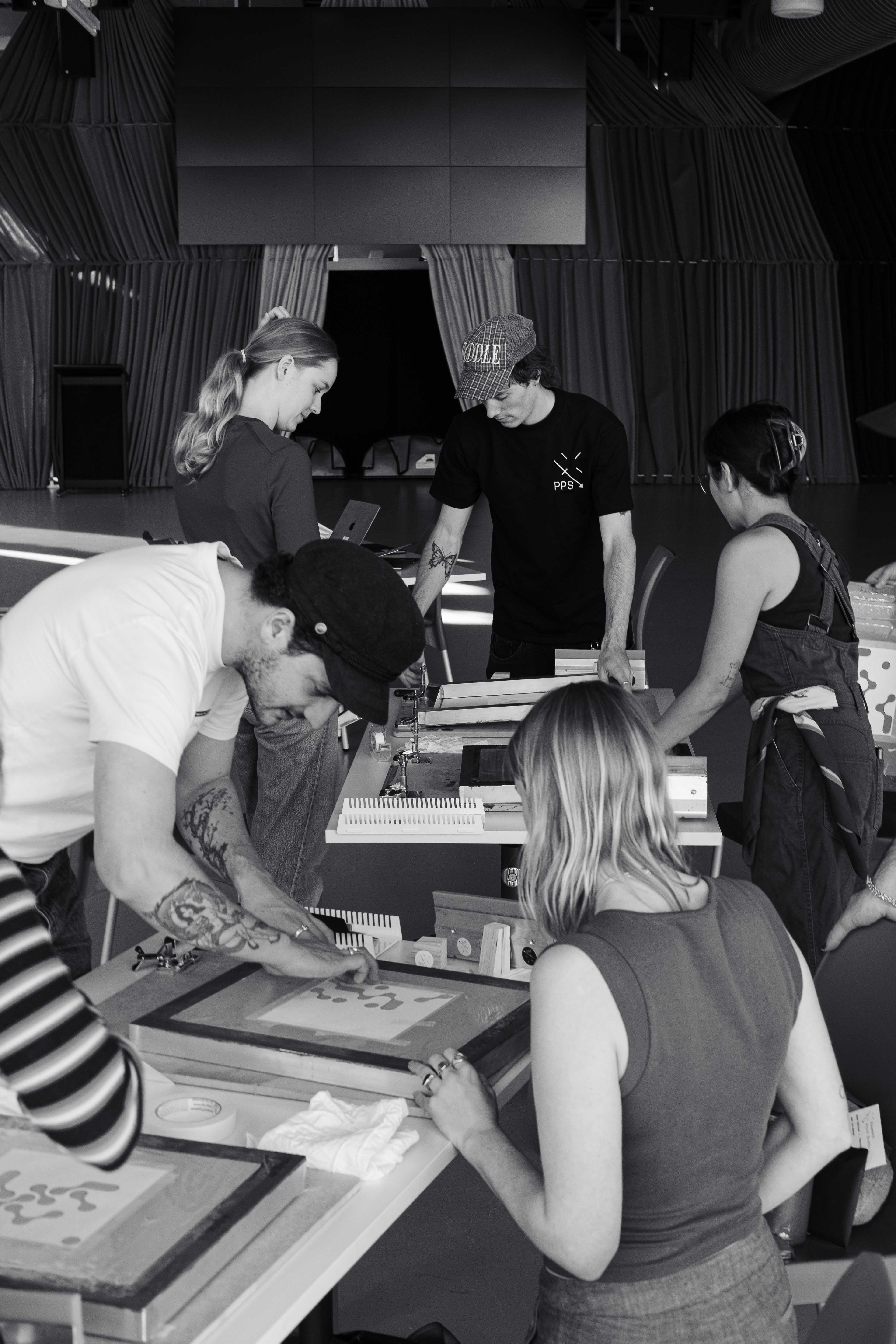
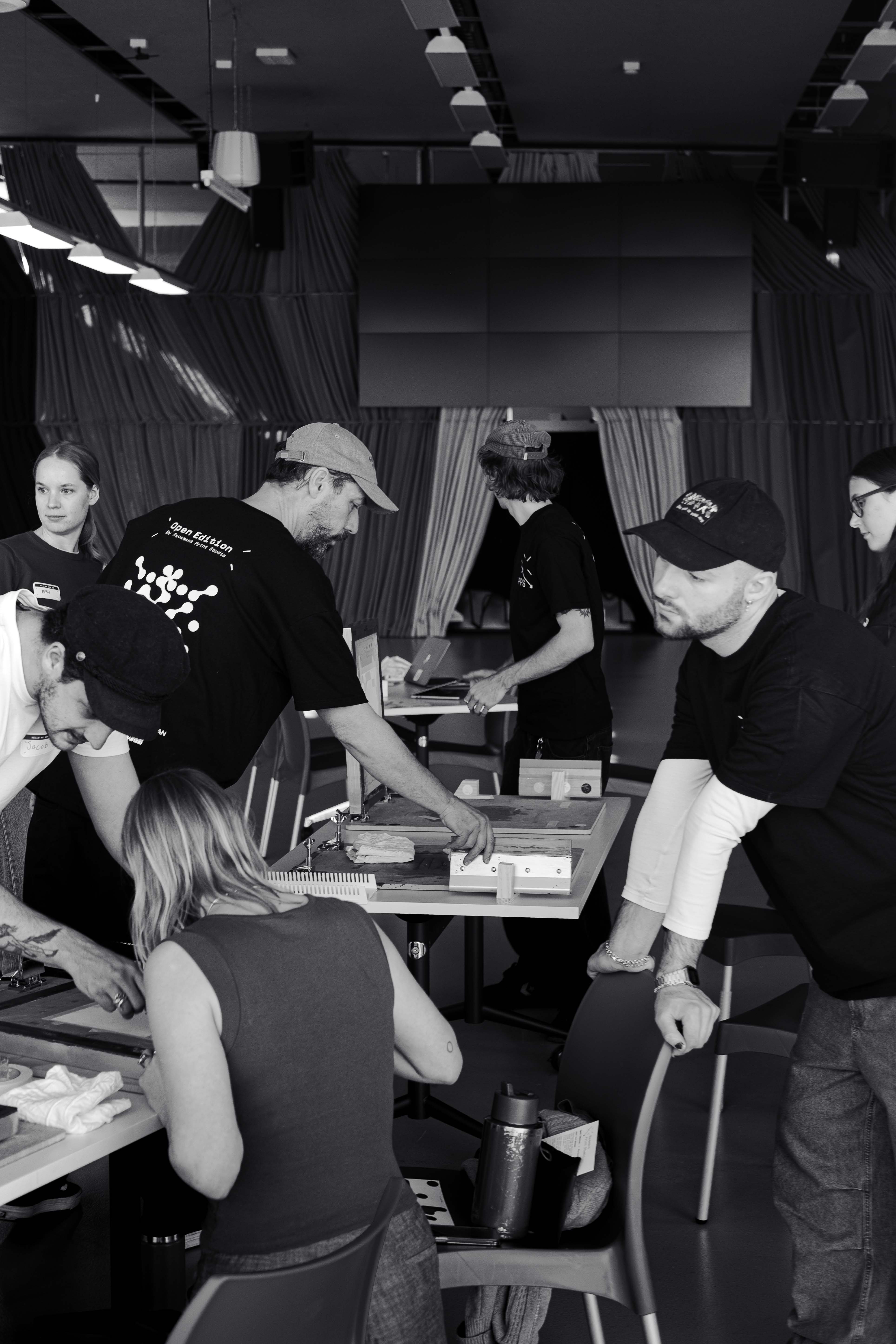
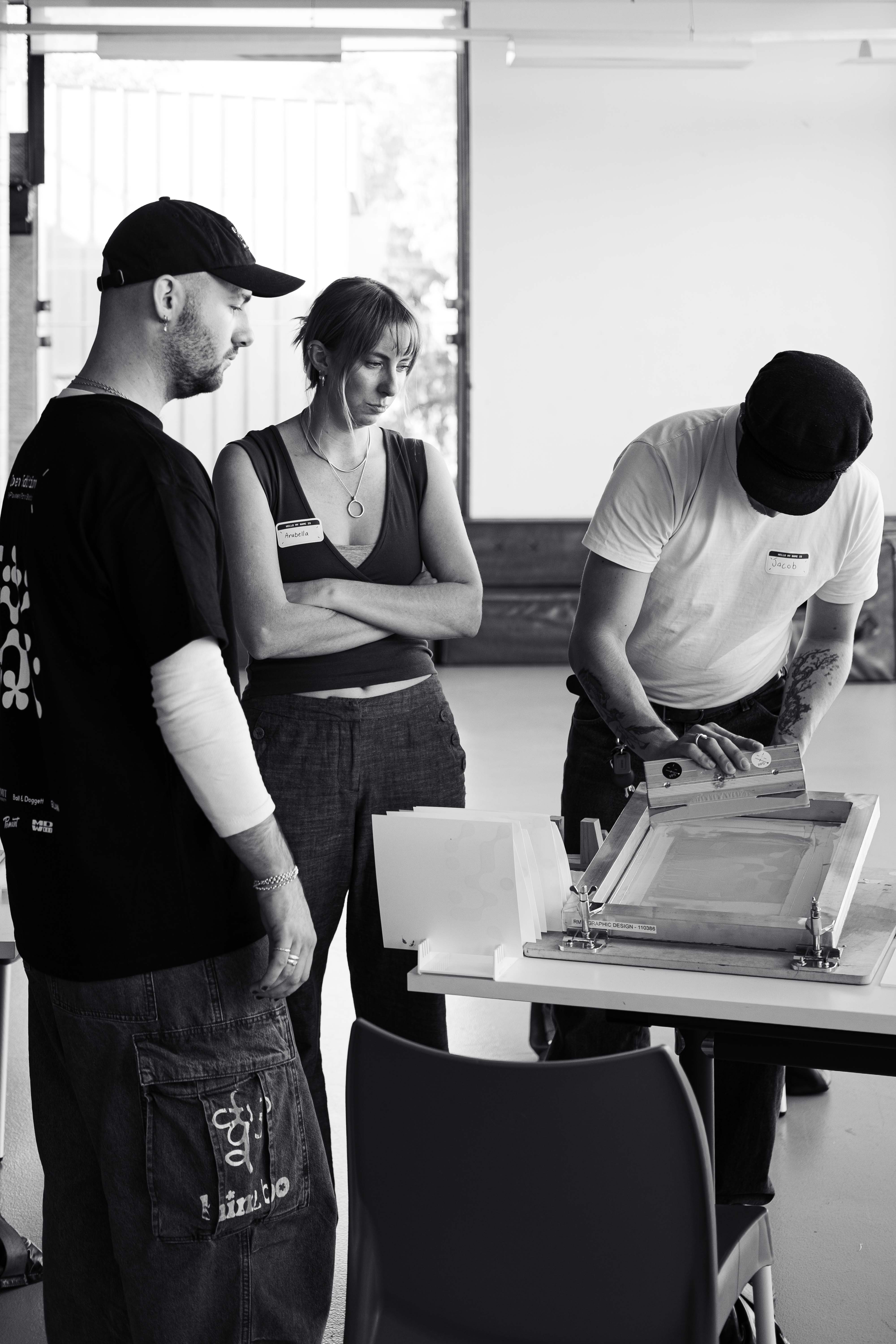
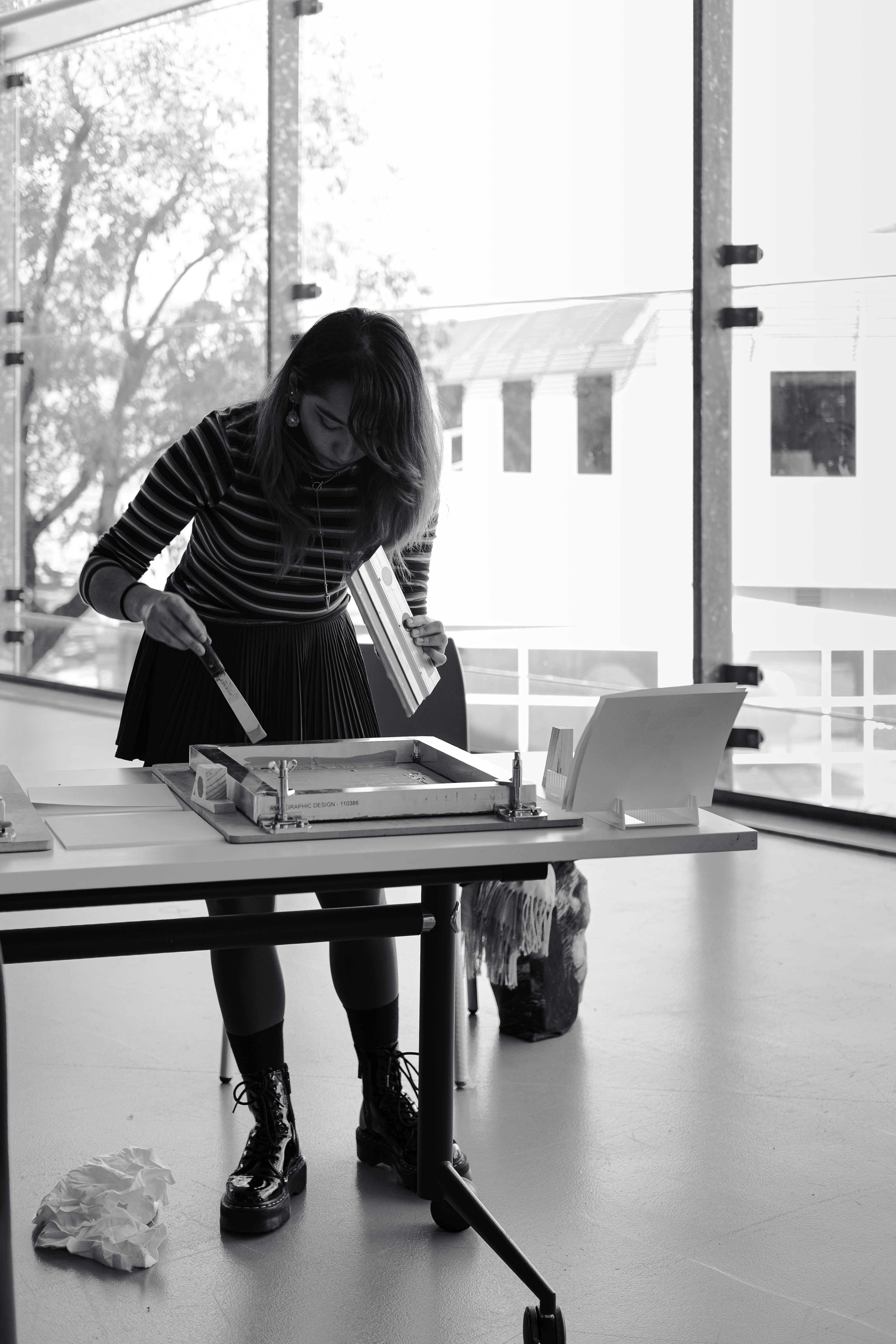
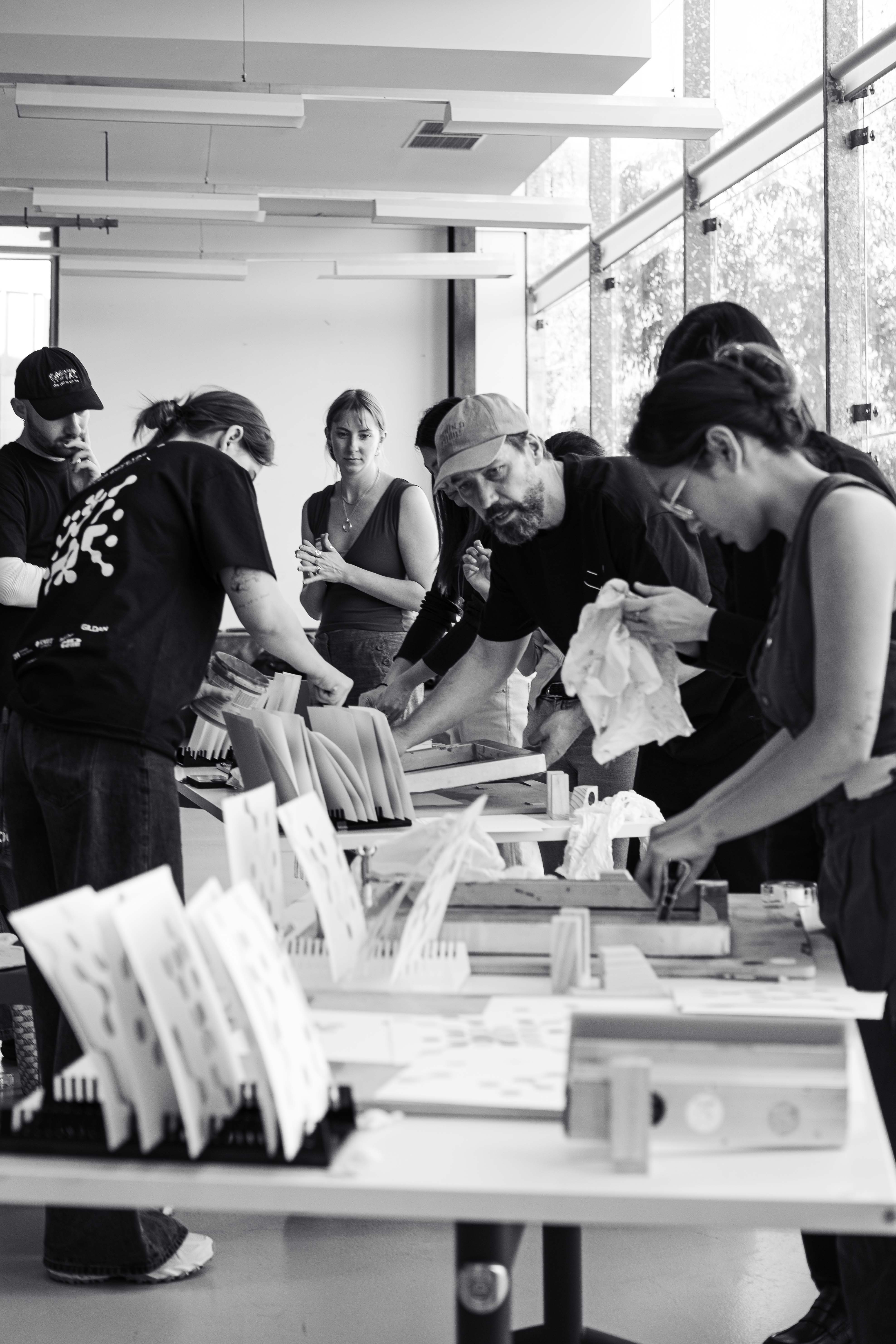
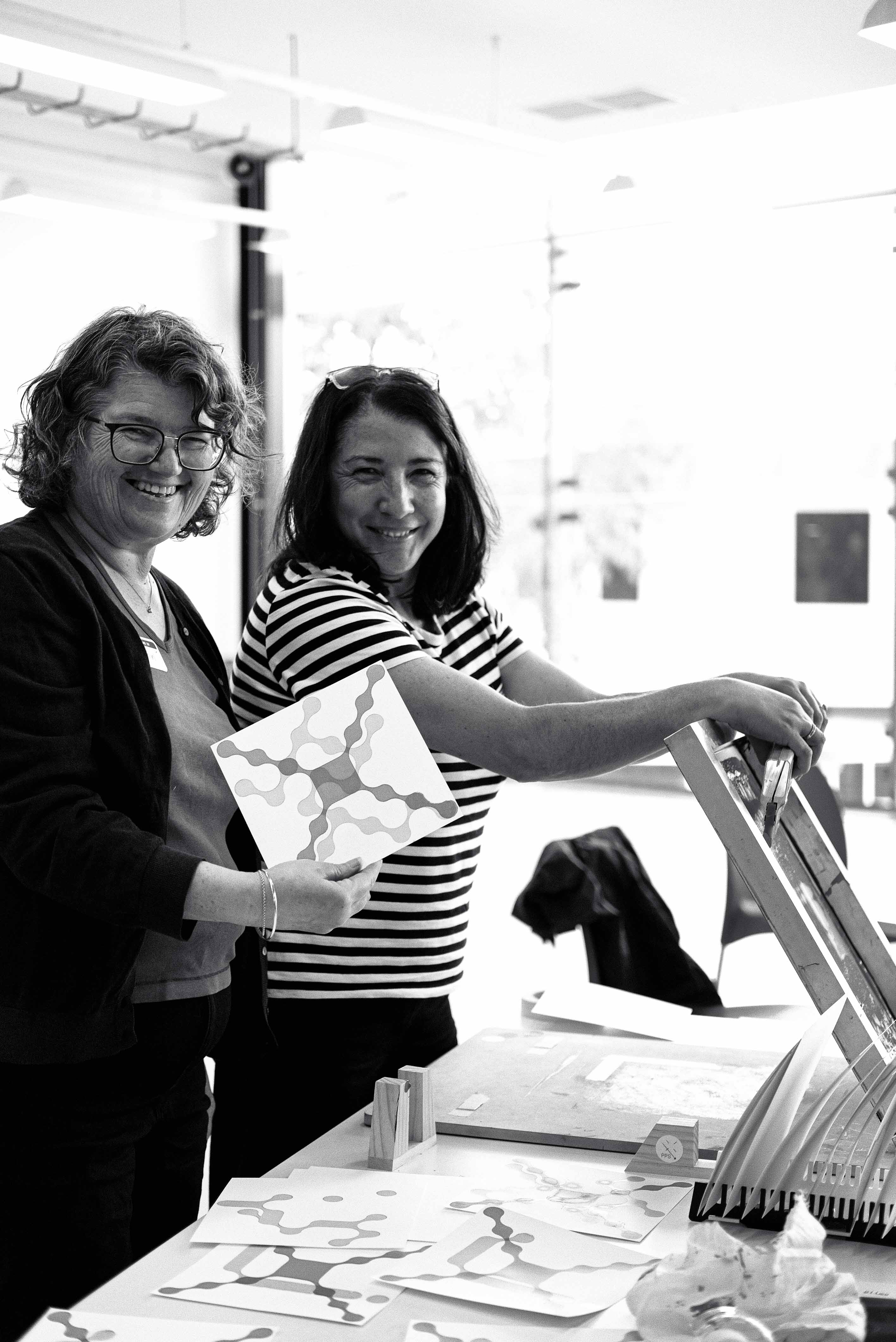
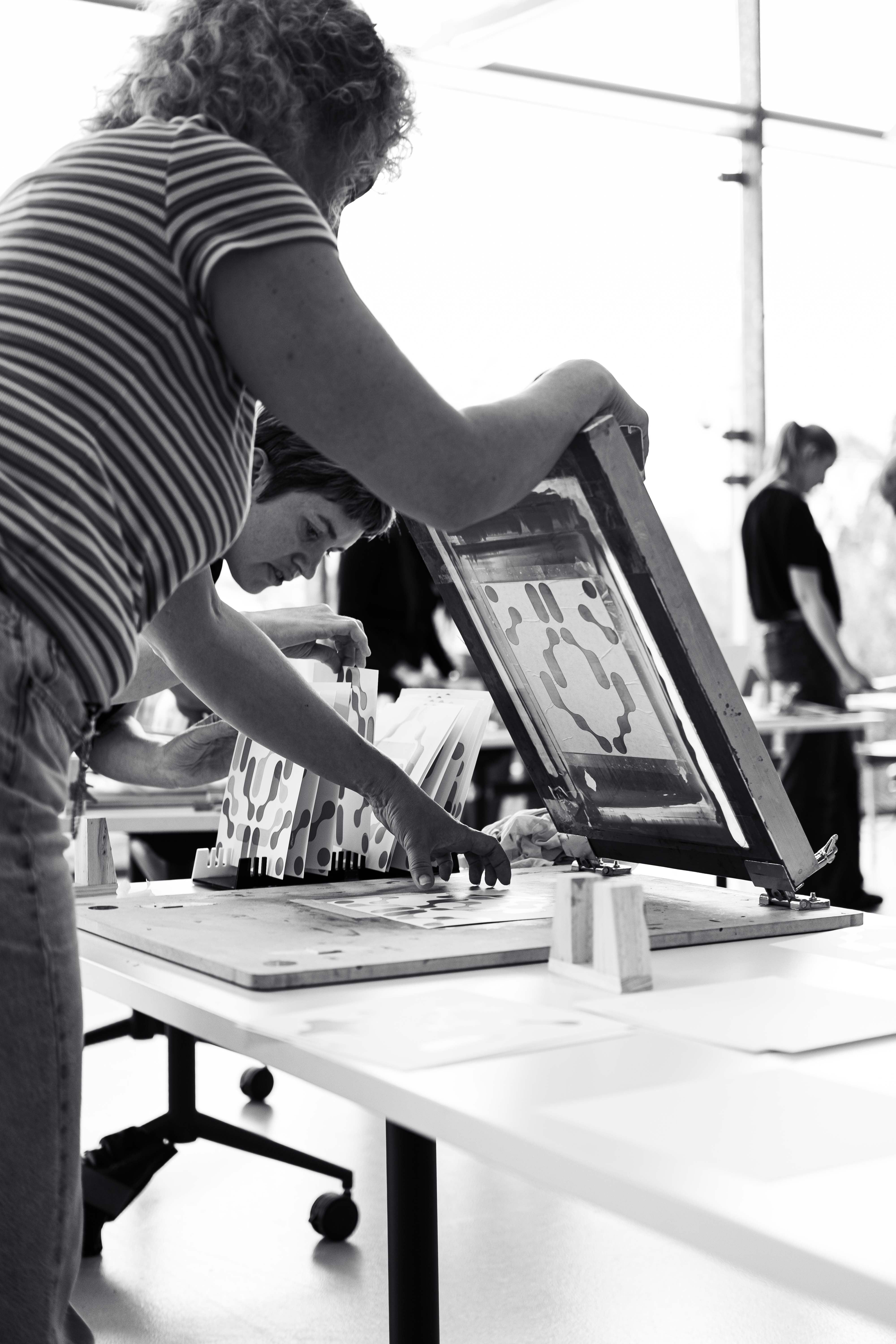
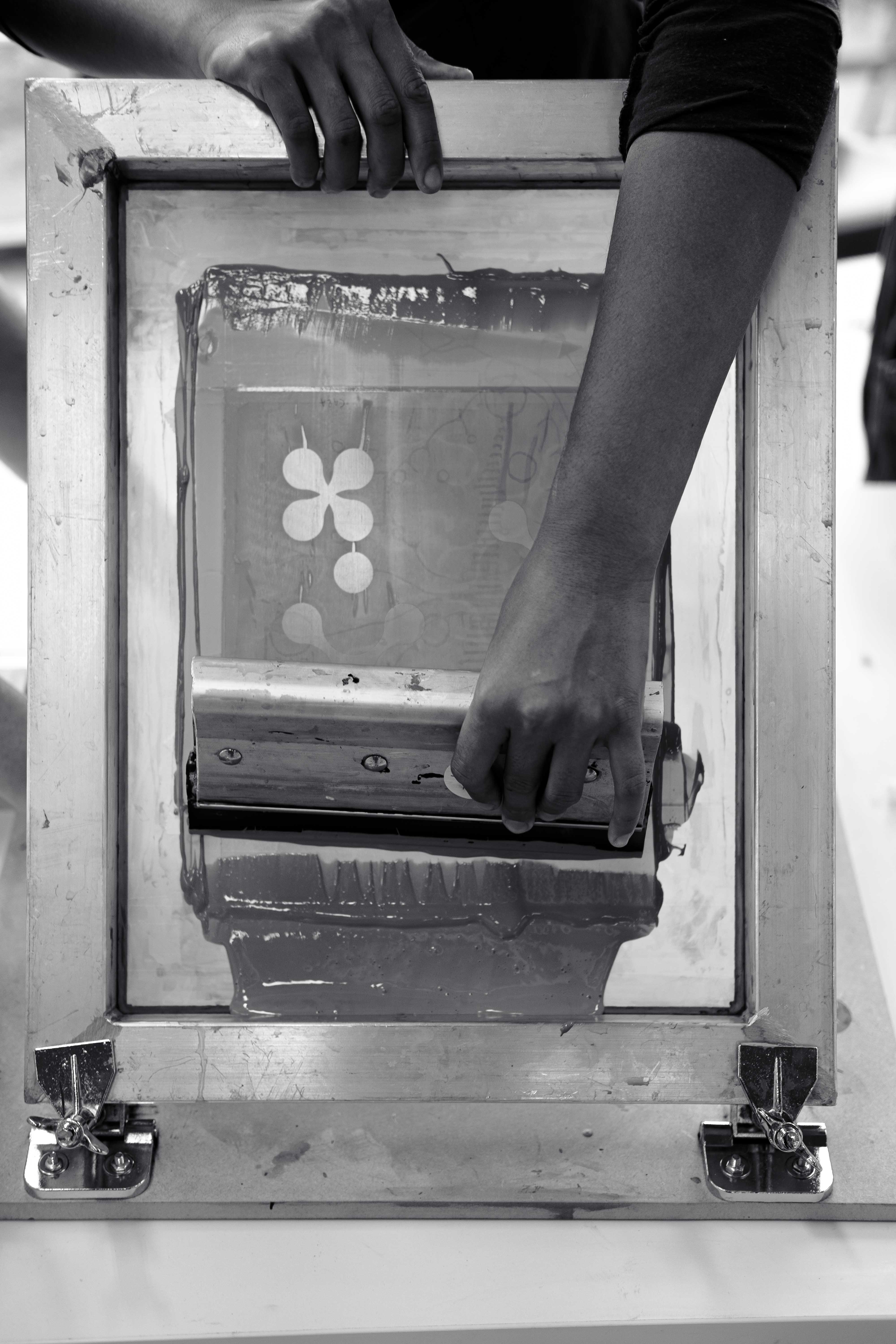
This was a different demographic for us compared to previous activations. These were post-study members of the public rather than students. The group included graduated graphic designers, communication design alumni, media and marketing professionals currently working in industry, practising designers from various disciplines, people interested in learning screen printing, secondary school art teachers seeking techniques for their classrooms, and even a couple of scientists.
Eighty people participated across the eight sessions. Each brought different experience levels and different reasons for attending. The shared grid system allowed genuine collaboration between people with vastly different skill sets and backgrounds.
The Exhibition
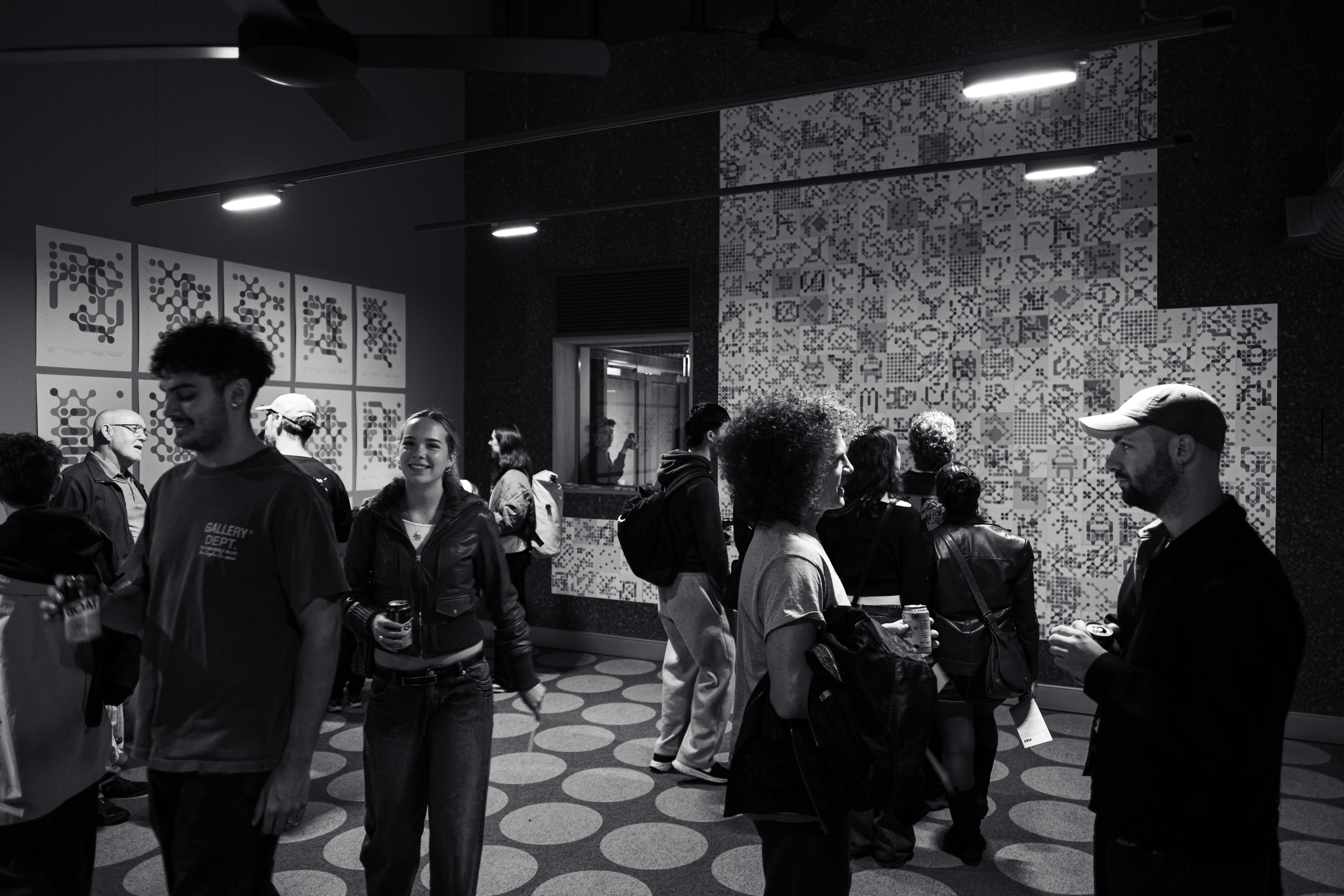
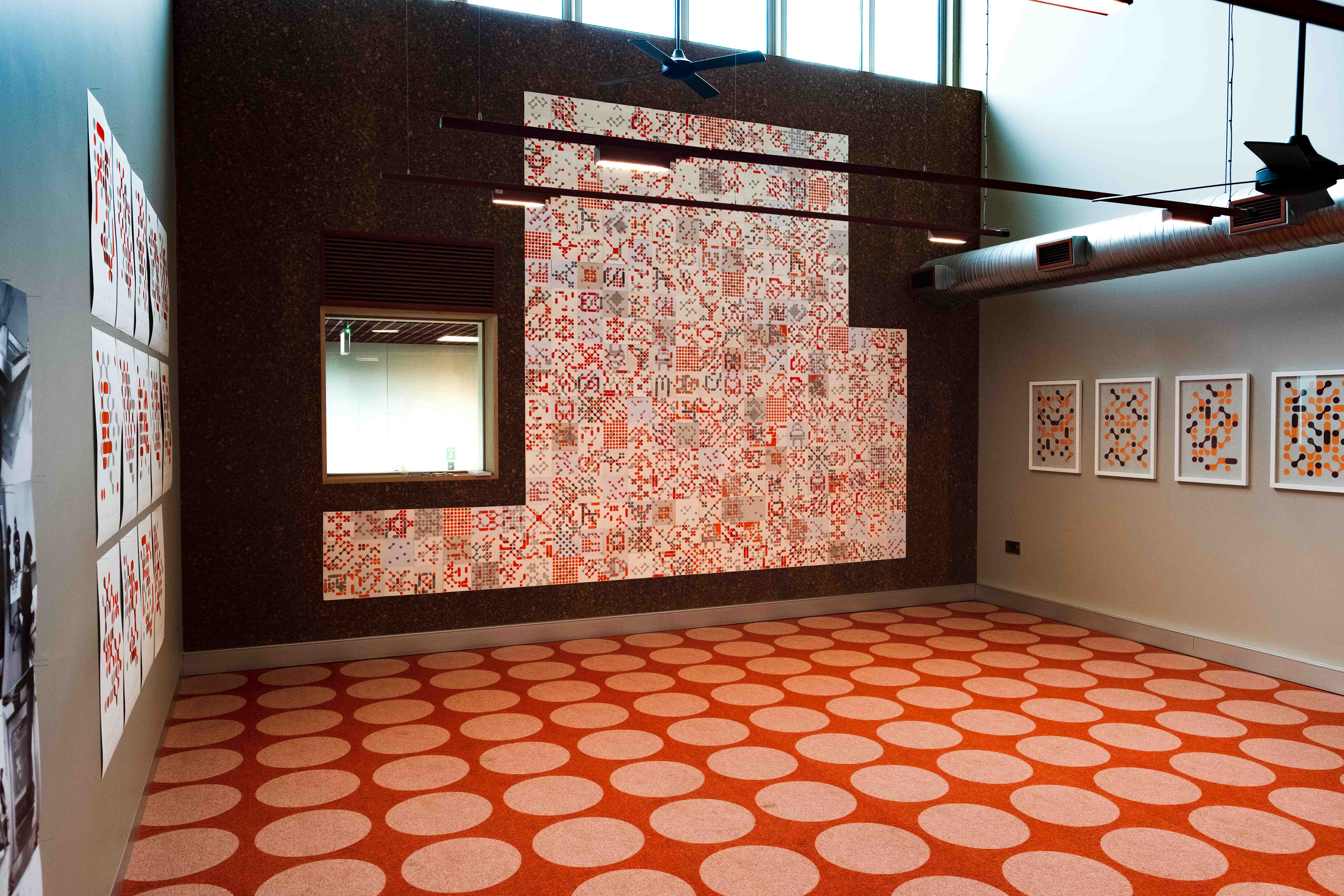
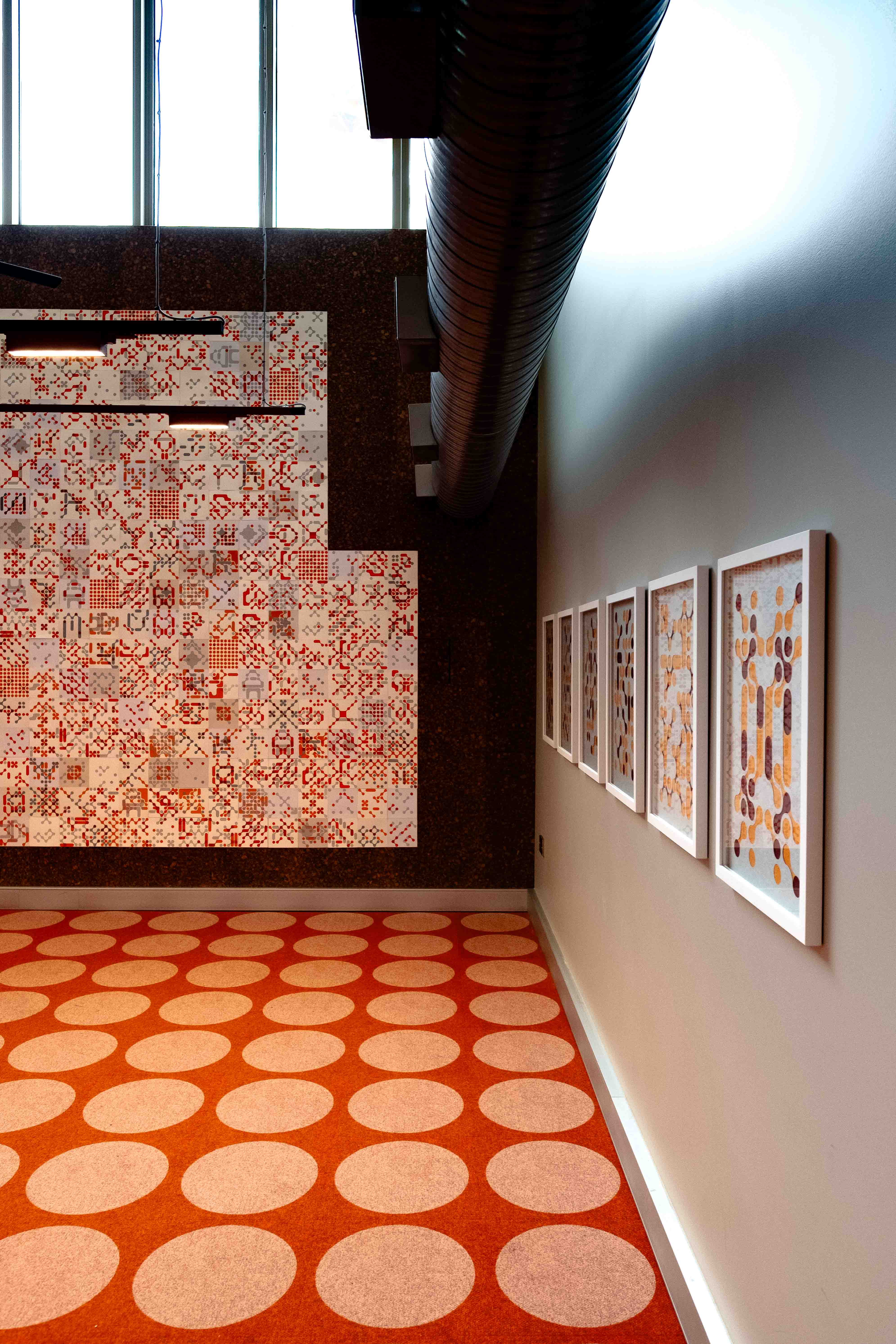
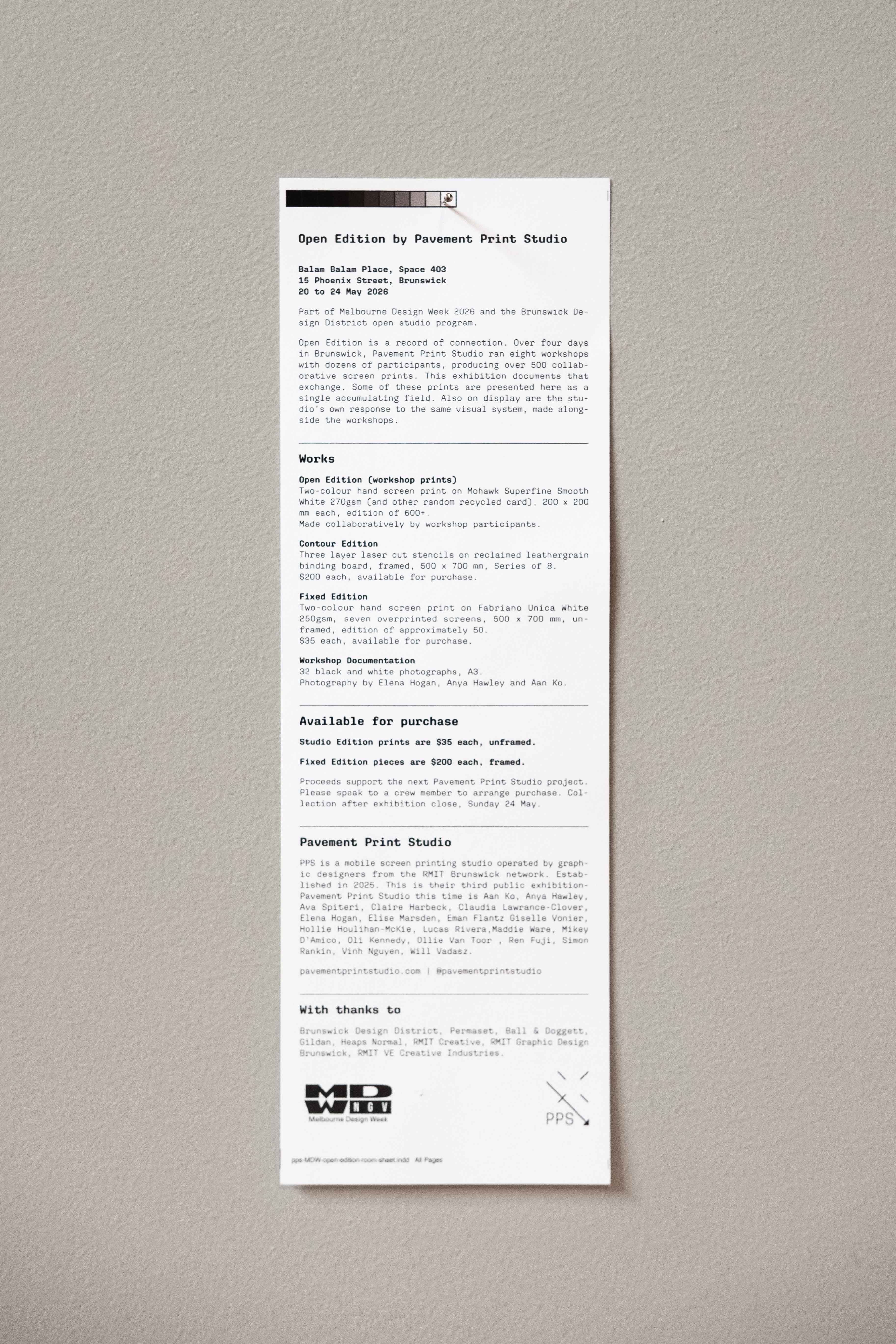
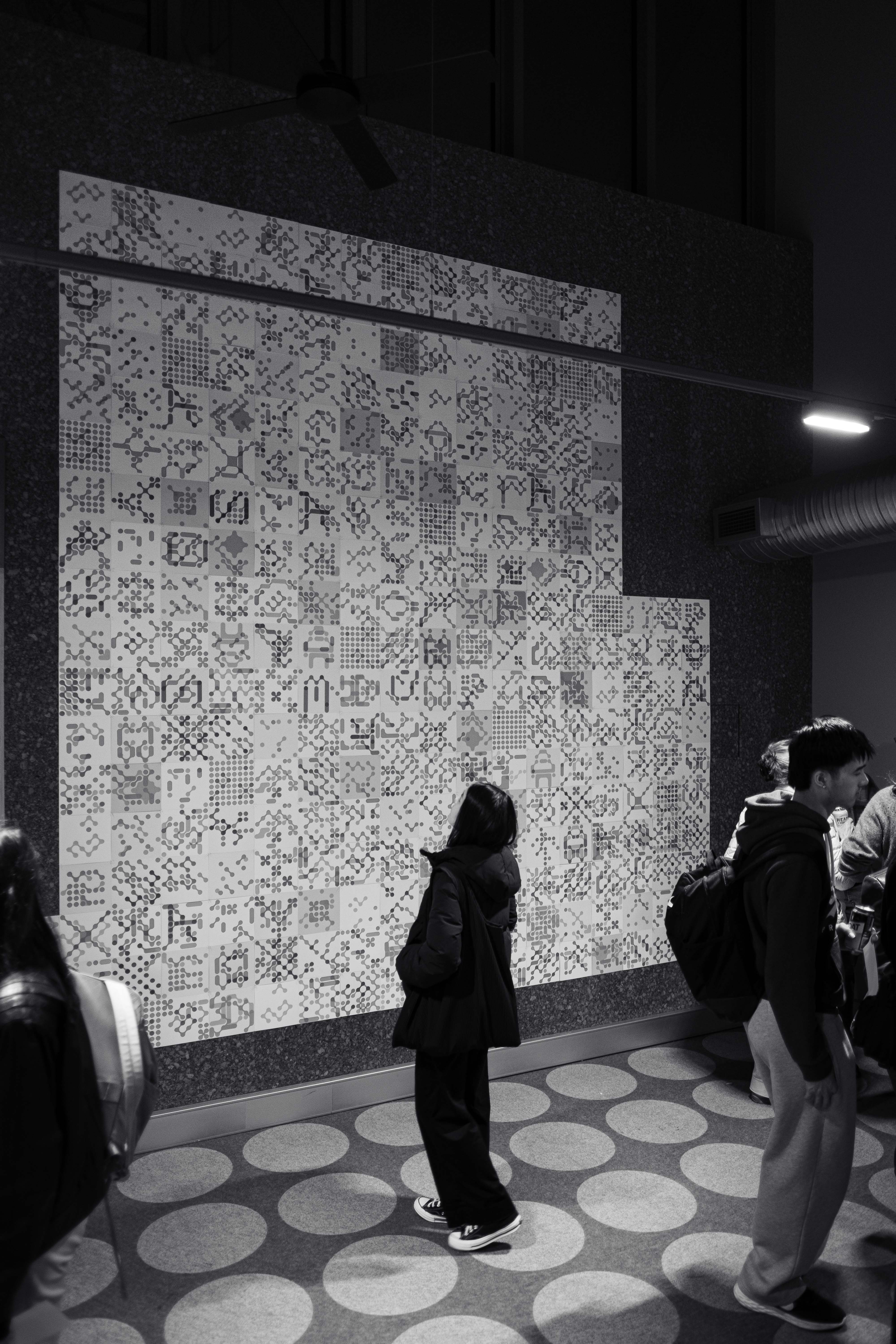
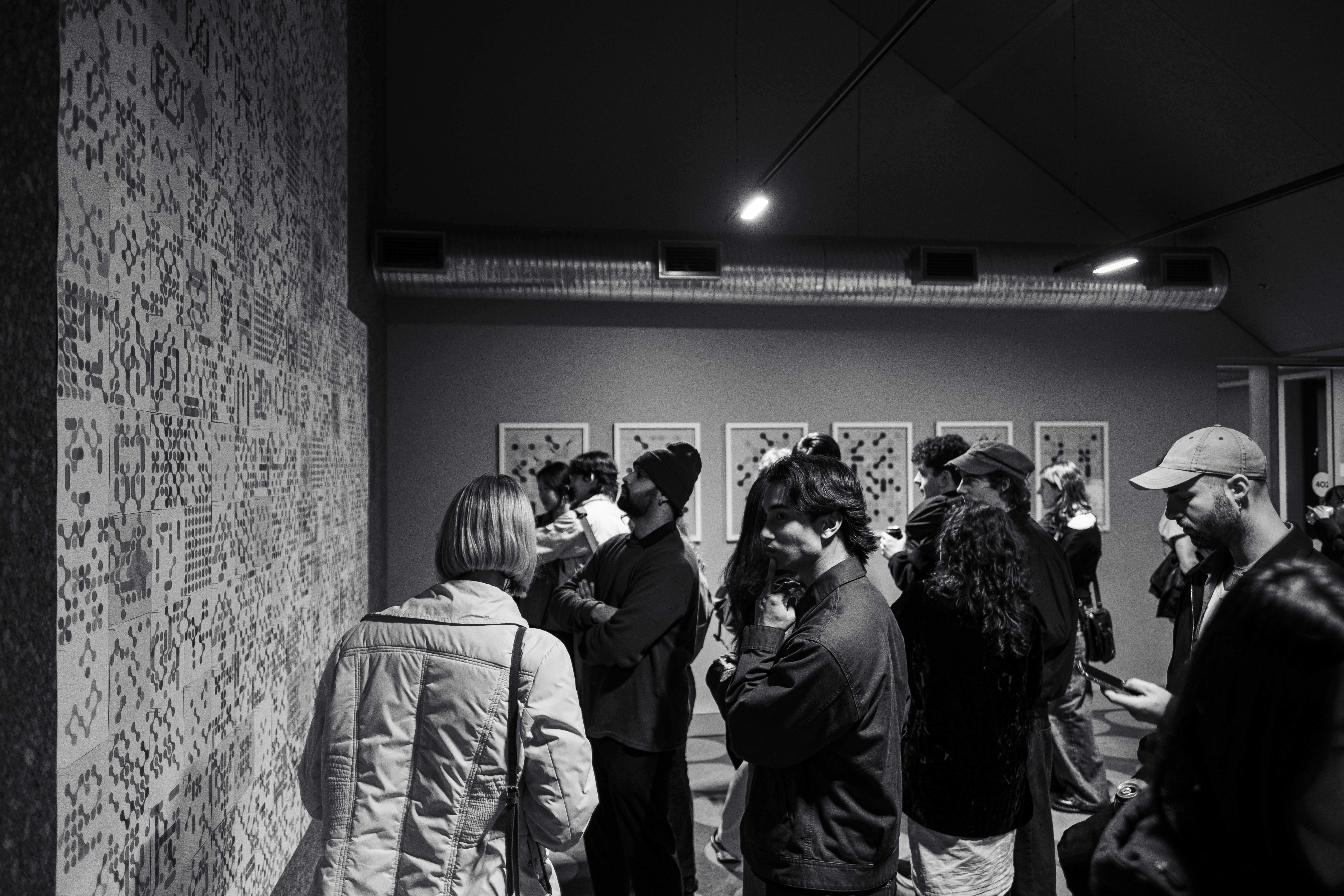
The installation at Balam Balam Place presented a curated selection from the 631 prints as a single accumulating field. Each individual print became part of collective work. The exhibition occupied Space 403 on the fourth floor, with the curated installation as the signature piece alongside documentation photography and additional studio work created in response to the same visual system.
The opening on 20 May drew eighty people. Many workshop participants returned to see their individual contributions within the larger installation context. The exhibition continued through 24 May with continuous visitors throughout Melbourne Design Week's final days. Balam Balam Place reported strong foot traffic across the run.
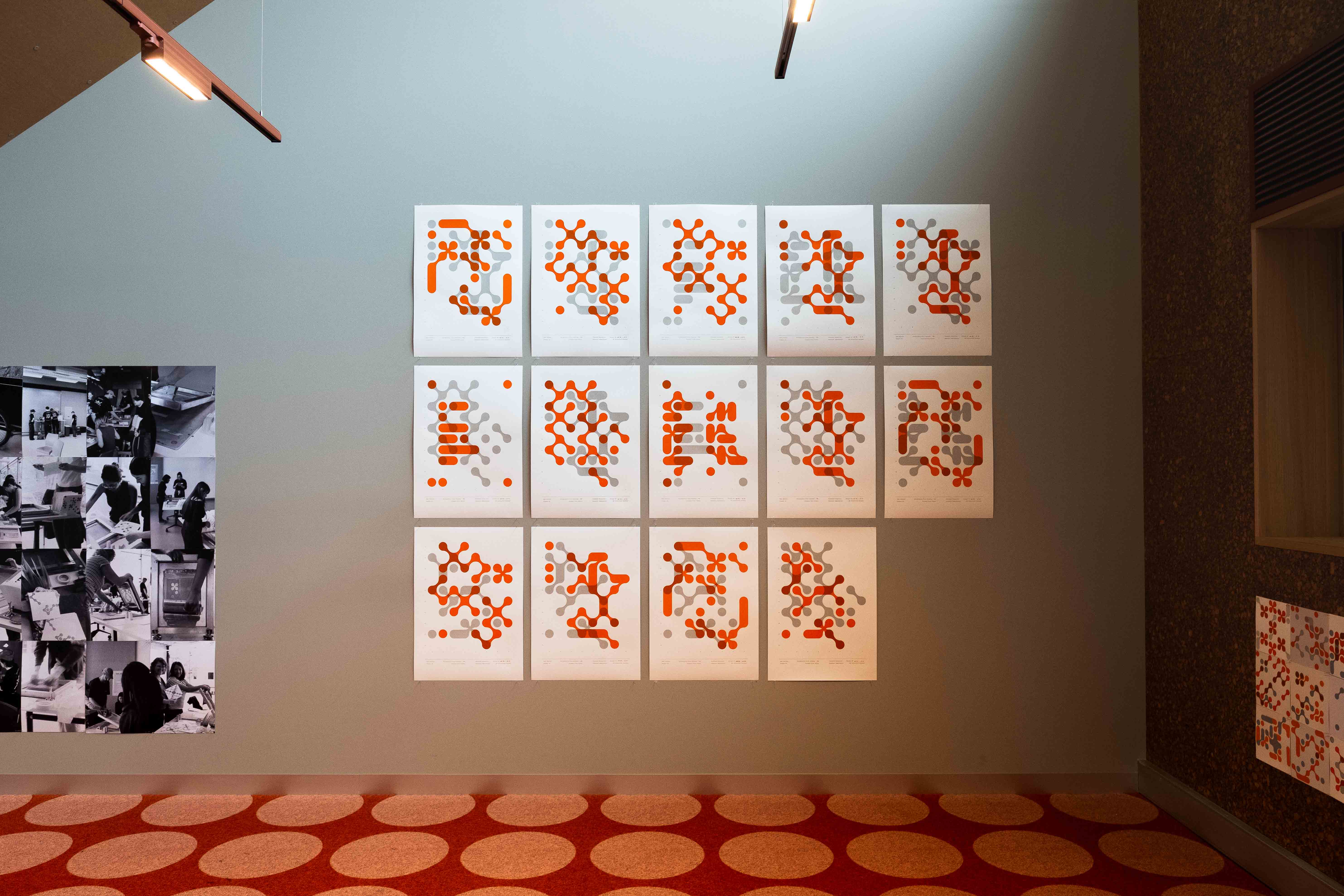
The 631 prints represent substantial visual output and form an impressive standalone graphic piece. But the prints also document something less tangible. They're a record of the connections formed through making them together.
The network motifs reflected actual networks created through the project. Networks between workshop participants who met while printing. Networks between participants and crew members facilitating sessions. Networks between the studio and institutional supporters making the programme possible. Networks between Melbourne Design Week, Brunswick Design District, and the RMIT Brunswick graphic design community.
This thinking connects back to our earlier work at Less Unreasonable, where we engaged with Bruno Latour's ideas about networks and relationships. Open Edition made those networks visible through collaborative printmaking whilst simultaneously creating them through the act of making together.
Support
Open Edition couldn't have happened without direct material support from partners who enabled free public workshops. Brunswick Design District and Melbourne Design Week provided the event framework. Permaset supplied non-toxic water-based screen printing inks. Ball & Doggett provided card stock. Gildan Brands Australia supplied crew uniforms. Heaps Normal provided drinks for the opening. RMIT Creative, RMIT Graphic Design Brunswick, and RMIT VE Creative Industries offered institutional backing and venue access.
The project gave a large group of Brunswick graphic design students and alumni experience running a major Melbourne Design Week activation combining education, graphic design practice, and artistic outcomes as named practitioners.
This was the third public exhibition for Pavement Print Studio.
The Work Behind It
Open Edition couldn't have happened without significant invisible labour. Behind the public-facing workshops and exhibition sat months of preparation and coordination across dozens of interconnected tasks.
Work was distributed across the crew. Everyone contributed to multiple aspects. Everyone took on tasks outside their usual comfort zones. The project succeeded because the crew stepped up.
The Pavement Print Crew - Artists and Designers
Aan Ko, Anya Hawley, Ava Spiteri, Claire Harbeck, Claudia Lawrance-Clover, Elena Hogan, Elise Marsden, Eman Flantz, Giselle Vonier, Hollie Houlihan-McKie, Isaac Piskopos, Lucas Rivera, Maddie Ware, Mikey D'Amico, Oli Kennedy, Ollie Van Toor, Ren Fujii, Simon Rankin, Vinh Nguyen, Will Vadasz, Em Tambree.
Supported by:
Brunswick Design District, Permaset, Ball & Doggett, Gildan Brands Australia, Heaps Normal, RMIT Creative, RMIT Graphic Design Brunswick, RMIT VE Creative Industries. Melbourne Design Week is an initiative of the Victorian Government through Creative Victoria.
Operating on unceded Wurundjeri Woi-wurrung land.
All photography in this story by Elena Hogan.
Tags
- melbourne design week
- brunswick design district
- collaborative printing
- exhibition
- workshops
Share
Recent Posts
- First Impressions at City North
- Printing at Topia Festival
- Open Day on the presses
- RMIT Student Life Puts the Spotlight on Pavement Print Studio
About Pavement Print Studio
A student-led mobile printmaking project from RMIT Associate Degree Graphic Design, bringing collaborative screen printing to public spaces.